
HEALTH JOURNAL
Thermal Moxibustion Robots vs Traditional Moxa: What Matters
Ben Wong · · Updated
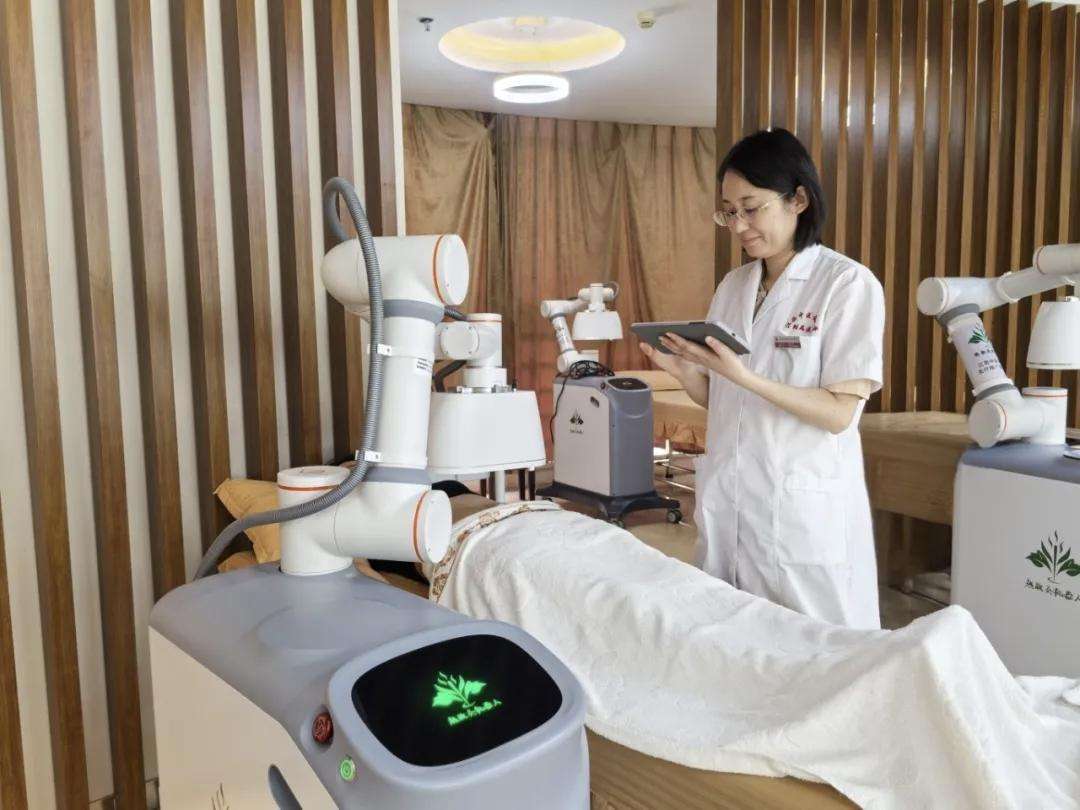
Traditional moxibustion usually burns processed mugwort near selected areas of the body. A thermal moxibustion robot changes how a heat source is supported, moved or regulated; some systems burn moxa, while others produce heat electrically. The important differences are the actual heat source, control and supervision, followed by the outcome the treatment is intended to address.
Wongs Acupuncture & Angel Alliance Physical Therapy lists thermosensitive moxibustion at its Manhattan office. The service describes practitioner assessment and a smart assisted system for adjusting position, treatment distance and heat exposure. It does not identify every model-specific feature. This guide explains what the different methods mean and what the clinical studies actually compared.
On this page
- Start with the source of warmth
- Compare features with their practical purpose
- Distinguish a device function from a clinical claim
- Understand what a temperature display means
- Discuss supervision before automation
- Clarify smoke, scent and ventilation
- Share the history that changes the plan
- Connect traditional terms with a clear goal
- Prepare for the session itself
- Review the response and the next decision
- Keep a record that supports a repeat visit
Start with the source of warmth
In handheld suspended moxibustion, a practitioner moves or holds a burning moxa stick above the skin. A holder or robotic arm can support the source and assist with positioning. Electrically heated or infrared imitation-moxa equipment generates warmth differently, without burning mugwort at that heat source. These are distinct delivery methods, even when all feel warm.
Heat-sensitive moxibustion is a treatment method, rather than another name for a robot. The practitioner explores areas for a characteristic response to suspended heat and adjusts the application. The Jiangxi hospital description of the method (Chinese) includes warmth perceived as penetrating deeper, spreading around the site or travelling to a more distant area. These describe a person’s sensation; they do not measure an organ’s temperature or establish that a disease has improved.
If you have had moxa before, explain which method you experienced. A previous handheld treatment may not resemble an equipment-assisted session. That history is useful when discussing what you liked, what was uncomfortable and what you would want clarified before another appointment.
Compare features with their practical purpose
| Comparison | Handheld or conventional moxa | Equipment-assisted delivery |
|---|---|---|
| Heat source | Commonly burning processed mugwort. | May support burning moxa or use another source; the heat source depends on the actual system. |
| Position | Practitioner holds or moves the source; holders may also be used. | A holder or mechanism supports or moves it; alignment still needs observation. |
| Temperature measurement | Heat and skin response are monitored during application. | A sensor measures its specified location; source, air and skin values differ. |
| Supervision | Practitioner observes skin, heat and patient response. | The same responsibilities remain; automation does not replace supervision. |
| Smoke and ash | Combustion requires attention to smoke, hot material and ventilation. | A burning-moxa system still needs these precautions; an electrical source is different. |
| Records and review | Method, area, exposure and response can be recorded. | Some systems also store settings; these support review, not an automatic clinical conclusion. |
A positioning mechanism can support a heat source, and a sensor can help regulate the quantity it measures. “AI moxibustion therapy” or “intelligent moxibustion device” is a description of a system, not a separate diagnosis or clinical outcome. Its actual sensing, positioning and control functions need to be explained for the equipment in use; the label alone does not establish automatic point recognition, a TCM diagnosis or superior treatment.
Distinguish a device function from a clinical claim
A timer describes duration, a temperature sensor records a value at its measurement location, and a positioning mechanism moves or holds a component. A skin-temperature reading is not a measurement of all deeper tissue. These functions can assist delivery, while selection of the treatment area and a TCM pattern still require assessment rather than an equipment label.
The practitioner connects your symptoms, medical history, skin and sensation with the purpose of treatment. Supervision includes watching the skin and heat source and responding to discomfort. A programmed movement does not remove these responsibilities.
Understand what a temperature display means
A heat source and the skin are not necessarily at the same temperature. Distance, exposure time and the way heat reaches the area matter to the experience.
A setting should not be interpreted as a universal prescription. The practitioner needs to consider the method, your history and your response rather than copy a number without context.
If you feel too hot, uncomfortable or unable to stay in position, speak up immediately. You should know before starting how to request an adjustment. Monitoring is a clinical responsibility as well as a conversation with you; a display should not be the only information used.
Discuss supervision before automation
Equipment can support parts of a procedure, while the practitioner remains responsible for deciding whether the method is appropriate and observing the response. The word automatic does not answer those questions.
The Clean Needle Technique manual, revised in 2024, directs practitioners to remain in the room during moxibustion, monitor skin temperature and heat, and not rely only on the patient’s heat sensation. It specifically calls for identifying neuropathy and other conditions that reduce sensation. These precautions apply to heat exposure; they do not establish better clinical outcomes from automation.
A clear pause-and-adjust process is practical information. Do not try to reposition a heat source or equipment yourself while treatment is underway; alert the practitioner so the setup can be checked.
Clarify smoke, scent and ventilation
Burning moxa can produce smoke, scent and ash. The actual materials and ventilation therefore matter. Tell the practitioner about asthma, respiratory sensitivity or previous reactions, including what happened. The Clean Needle Technique manual advises considering options other than moxa for a history of significant asthma or other smoke reactions.
“Smokeless” does not mean every product uses the same heat source. The public scope of ISO 21366:2026 concerns combustion-type smokeless moxibustion devices and their performance and safety testing. It excludes electrical and infrared imitation devices. This distinction explains the product category; it does not establish the clinic’s model or its conformity to the standard.
When moxa is burned, ventilation and protection from hot material remain part of the procedure even if visible smoke is reduced. The treating team should explain the source used, how smoke is managed and how heat can be stopped. A marketing term does not replace those arrangements.
Share the history that changes the plan
Tell the practitioner about reduced skin sensation, circulation concerns, diabetes, fragile skin, a wound or a recent procedure near the intended area. Mention pregnancy or possible pregnancy and relevant medical instructions. These details may affect suitability, positioning or whether another assessment is needed first.
Include peripheral nerve problems and previous heat reactions. A new injury, fever or a substantially changed symptom may need medical assessment before local warming. Do not rely only on your own heat sensation to screen every risk.
If you take medicines or have an established condition, bring an updated list and the treating clinician's advice when relevant. Do not assume that a warming treatment is unrelated to your medical history because no tablet is being taken. The practitioner should review the actual method with you.
Be specific about the area you want addressed and why. A painful area after a new injury raises different questions from a familiar local sensation. A service menu cannot determine the cause of a symptom, so explain changes before the treatment plan is selected.
Connect traditional terms with a clear goal
In the traditional framework, moxibustion is used to warm channels, disperse Cold and support Yang, as described by Beijing Hospital of Traditional Chinese Medicine (Chinese). Qi refers here to functions such as movement and warming; Yang describes the warming and activating aspect of those functions. Cold, Dampness and Blood stasis are traditional pattern terms, not a diagnosis made from a thermometer.
The assessment distinguishes several related situations. Cold obstructing the channels describes discomfort aggravated by cold with relative relief from warmth; the traditional goal is warming and restoring movement. When heaviness and stiffness accompany the cold features, a Cold-Damp component may be considered, with a goal of warming and easing that obstruction. Yang deficiency describes an inadequate warming function, assessed with the broader history rather than cold hands alone; supporting that function is a different emphasis from treating an isolated obstruction. Fixed pain may bring a Blood-stasis component into the assessment, alongside Cold or deficiency. The main pattern and accompanying features guide the emphasis; they are not a reason to apply more heat to everyone.
These explanations guide the traditional treatment plan. Whether it is useful is reviewed through the original problem: for knee symptoms, for example, pain during walking, stiffness and the ability to use stairs, together with duration of any change and skin response. Comfortable or spreading warmth is one part of the session experience, rather than a substitute for those outcomes.
An acupuncture assessment can be discussed separately for an appropriate pain concern. Moxibustion need not accompany every acupuncture appointment, and the choice of a warming method depends on the assessment and the person’s response.
What did the clinical comparisons find?
A 2015 three-arm trial in China randomized 432 people with knee osteoarthritis to heat-sensitive moxibustion, conventional moxibustion or sodium-hyaluronate injections. The heat-sensitive group had better reported knee-osteoarthritis outcomes at the one- and seven-month assessments than either active comparator. Conventional moxibustion and the injection group did not differ on the reported measures. This compared treatment methods in that knee population, rather than testing a robot or AI system.
A 2021 trial of 90 people with mild-to-moderate knee osteoarthritis compared handheld moxa, an imitation-moxibustion apparatus and shelf moxa, initially 30 per group. Heat-sensitive areas were explored, and treatment was given every other day for ten sessions. All groups improved from baseline in pain and knee-function measures. Handheld moxa produced lower pain scores than the imitation apparatus, while handheld and shelf moxa produced better knee-function scores than that apparatus; their heat-sensitive sensations were also richer or stronger. The apparatus in this study was not identified as the clinic’s robot.
Together, these studies show why heat sensation, treatment delivery and knee outcomes need to be described separately. They do not establish that any newer device is superior, that stronger sensations predict an individual result, or that a knee-osteoarthritis finding applies to another condition. A study’s ten-session schedule is also different from choosing a course for one person.
Prepare for the session itself
Tell the office if you have difficulty getting onto a treatment table or remaining in one position. The setup should be discussed before heat is applied, rather than adjusted hurriedly after you become uncomfortable.
Confirm the session duration and what is included. Do not use an initial acupuncture or PT time estimate as a universal duration for every thermal procedure.
Read the consent information and raise unanswered questions. Knowing the plan in advance makes it easier to focus on the treatment experience and communicate clearly during the session.
Review the response and the next decision
Afterward, describe comfort during treatment and any skin response. Burning pain or blisters are reasons to stop and obtain appropriate advice, rather than a goal of this warming service. A burn that is significant or appears infected needs medical assessment.
If you are following a course, record the original concern in a simple way and compare the same observation at review. Include how long any change lasted and what else changed in your routine. The purpose is to decide whether to continue, adjust or seek another assessment.
Use the Manhattan clinic page and current service listing to confirm the practitioner, equipment and availability. A Manhattan listing does not establish the same thermal service in Forest Hills or Great Neck. Keep the choice tied to the actual appointment and the goal you have discussed.
Keep a record that supports a repeat visit
For a repeat visit, a simple record of the method, treatment area, skin response, original symptom and activity goal is useful. “Smart health management” can support recording and reviewing those details when the system provides that function; data storage itself does not diagnose illness or show that a session worked. The practitioner still interprets changes alongside your history and other care.
Moving from handheld moxa to equipment-assisted warmth, or changing the heat source, can change the procedure you experience. Review the relevant preparation and consent again rather than assuming the previous explanation covers every new setup.
If the plan is to continue the same method, confirm what the next review is intended to establish. A repeated session should remain connected to the agreed goal. If your symptoms or health have changed, bring that update before the equipment is positioned.