
HEALTH JOURNAL
Acupuncture for Post-Stroke Upper-Limb Rehabilitation
Ben Wong · · Updated
Acupuncture added to rehabilitation helps improve arm movement and daily function in the early, clinically stable ischemic-stroke population studied. Care is planned around the upper-limb tasks you are working to regain.
This guide focuses on clinically stable adults within the first three months after an ischemic stroke and on upper-limb recovery.
On this page
- Does Acupuncture Help with Post-Stroke Upper-Limb Rehabilitation?
- How Effective Is Acupuncture for Post-Stroke Upper-Limb Rehabilitation?
- Is Acupuncture Backed by Science?
- What You Should Know Before Booking an Acupuncture Treatment
- How Do You Know If Acupuncture Is Working?
- How to Get Acupuncture for Post-Stroke Upper-Limb Rehabilitation at Wongs Acupuncture
- Final Thoughts About Acupuncture & Post-Stroke Upper-Limb Rehabilitation
- Sources
Does Acupuncture Help with Post-Stroke Upper-Limb Rehabilitation?
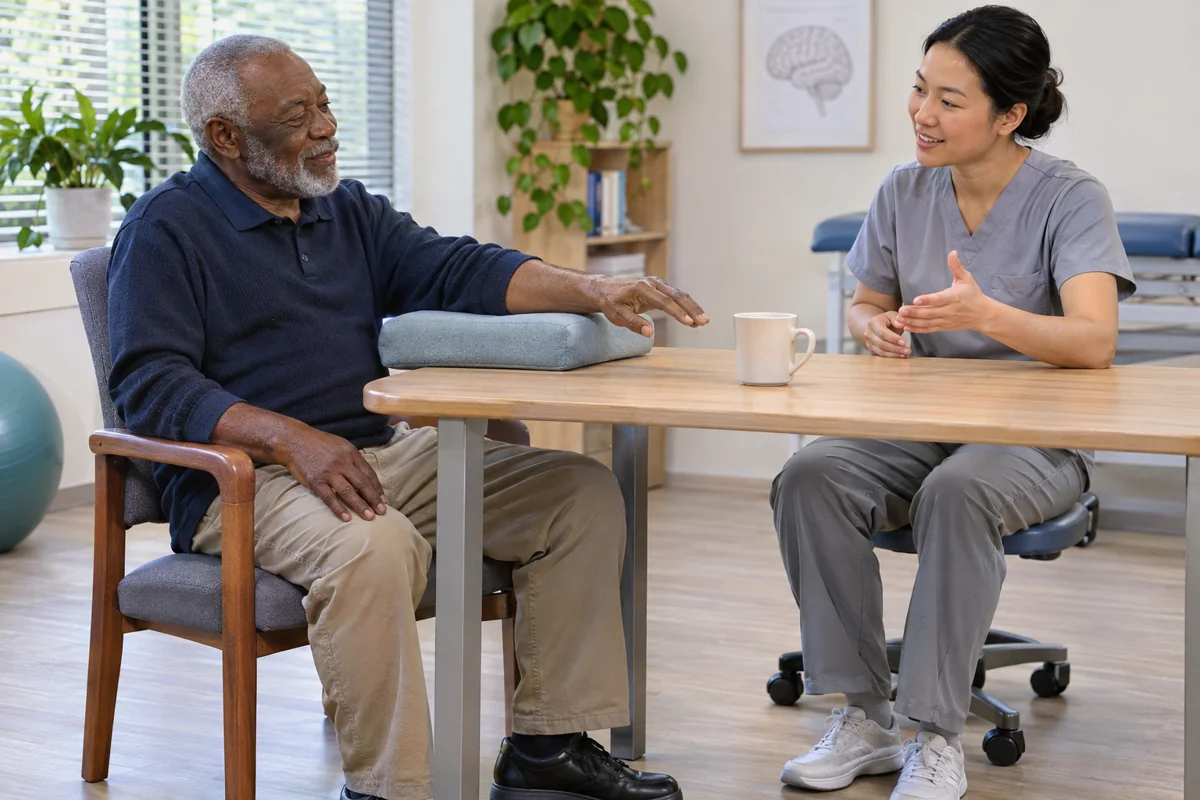
Yes. Acupuncture alongside rehabilitation helps improve arm movement and daily function after ischemic stroke in the early recovery population studied. It is organized around practical upper-limb goals, such as reaching, positioning the arm and using it in everyday tasks.
An ischemic stroke occurs when a blood vessel supplying the brain is blocked. This article focuses on clinically stable adults in the first three months after ischemic stroke who have arm-movement difficulties. The consultation begins with the stroke record, current rehabilitation stage, medicines and the tasks being practiced.
Describe the activity you most want to make easier: bringing the hand toward the mouth, positioning the arm for dressing or reaching toward an object. These examples help connect the treatment with your existing rehabilitation goals. The therapist’s instructions about shoulder support, assistance and activity limits remain part of the plan.
What can make the arm difficult to move?
Weakness, pain, restricted joint motion and increased muscle tone describe different findings. Weakness limits active effort; joint restriction limits the movement available; pain makes an action uncomfortable; increased tone makes the muscles resist movement. The rehabilitation assessment separates these findings so that support, activity goals and practice can be matched to the actual difficulty.
How does Chinese medicine approach a weak or difficult-to-move arm?
Traditional acupuncture interprets restricted movement through the function and nourishment of the channels associated with the limb. The textbook chapter on stroke describes promoting channel movement and harmonizing qi and blood for limb-function problems. Qi refers to functional activity, while blood includes the traditional idea of nourishment.
The practitioner considers weakness and fatigue together with stiffness, heaviness, sensation and the overall examination. A depleted presentation gives more emphasis to supporting and nourishing; a presentation dominated by restricted movement and obstruction gives more emphasis to promoting movement through the affected channels. Traditional Phlegm and blood-stasis language describes that framework, while the stroke diagnosis and neurological examination establish the medical condition.
Why might treatment use arm points and distant points?
Local points are selected around the limb-function goal, and distant points are included through traditional channel relationships and the overall pattern. Quchi, near the elbow, is an example used in the textbook’s upper-limb discussion. The recent clinical trial also used Neiguan and Zusanli, together with head and neck points such as Baihui and Dazhui, within its standardized treatment.
The practitioner chooses local, distant or combined areas around positioning, sensation, comfort and response. Clinical experience and preferences also influence selection. The point examples explain the reasoning; assistance and support are arranged around your rehabilitation precautions.
How Effective Is Acupuncture for Post-Stroke Upper-Limb Rehabilitation?
The benefit shown in the matched trial was greater improvement in upper-limb motor function and daily activities when acupuncture was added to the same rehabilitation program.
That means the treatment discussion can focus directly on arm control and useful activity. A better movement pattern during reaching, greater participation in dressing or improved use of the arm within the task being practiced can provide concrete goals for the care team to review.
Acupuncture and rehabilitation are planned alongside each other. Practice remains organized by the rehabilitation clinician around the person’s current ability, assistance needs and precautions. Our guide to rehabilitation progress reviews explains how activity goals and response help shape an ongoing plan.
Is Acupuncture Backed by Science?
A 2026 randomized trial found that adding manual acupuncture to conventional rehabilitation improved upper-limb motor scores and daily-activity scores more than either comparison group.
The three-arm trial of 84 adults included clinically stable patients within three months of ischemic stroke. All groups received the same four-week rehabilitation program. The additional improvement in the upper-limb Fugl–Meyer score was about 9.6 points compared with rehabilitation alone.
That score assesses arm-movement performance. The study also found greater improvement in a daily-activity measure. Its useful clinical focus is early, stable ischemic-stroke upper-limb recovery with acupuncture added to an organized rehabilitation plan.
What You Should Know Before Booking an Acupuncture Treatment
Bring the stroke discharge summary, medicine list, rehabilitation instructions and any current arm-function assessment. Tell the clinic about blood thinners, altered sensation, skin problems, shoulder pain, fatigue and the assistance needed for transfers or sitting. Explain any communication needs or whether a companion helps you express discomfort.
The first acupuncture appointment is about 75–90 minutes, covering history, assessment and treatment. Tell the clinic about mobility and positioning needs before arriving so the visit can be planned. The arm should be supported according to the rehabilitation precautions, with movement assistance agreed in advance.
The practitioner explains the chosen areas and uses fine, sterile, single-use needles. Changes in sensation or discomfort should be reported promptly. Continue stroke medicines and the prescribed rehabilitation plan. New face drooping, arm weakness or speech difficulty needs emergency assessment; call 911 in the United States.
How Do You Know If Acupuncture Is Working?
Better arm control and greater participation in the same daily task are useful signs of progress. Compare the activity at a similar level of assistance.
- Use a task already chosen with the rehabilitation team, such as reaching toward a cup or helping with a sleeve.
- Note the amount of help needed, movement quality and how much fatigue the task produces.
- Bring repeated arm-function assessments when they are available, alongside your own description of daily changes. A rehabilitation clinician assesses scales such as the Fugl–Meyer upper-limb measure; your notes add the everyday-task view.
The practitioner reviews these changes with the current rehabilitation plan and adjusts the treatment areas, positioning and follow-up. The shared goal is useful activity practiced safely at the person’s present stage of recovery.
How to Get Acupuncture for Post-Stroke Upper-Limb Rehabilitation at Wongs Acupuncture
Book an acupuncture appointment at our Manhattan, Forest Hills or Great Neck office and tell us that you are seeking care for post-stroke upper-limb rehabilitation. Our acupuncture service page connects you with the three offices and appointment options.
Bring the relevant records and your current treatment plan. For coverage questions, review the insurance and appointment information and share your plan details when arranging the visit.
Final Thoughts About Acupuncture & Post-Stroke Upper-Limb Rehabilitation
Acupuncture alongside rehabilitation helps improve upper-limb function in the early, stable ischemic-stroke population studied. Bring the stroke and rehabilitation records so the consultation can focus on meaningful arm tasks and coordinated care.
Sources
OUR LOCATIONS
Choose a clinic.
Choose a convenient location to discuss your needs or arrange a visit.