
HEALTH JOURNAL
Adult Flatfoot Pain: Assessment and the Role of Physical Therapy
Dr. Wei (Sean) Li · · Updated
A low arch and a painful, changing arch are different starting points. If your foot has become flatter in adulthood and you now have inner-ankle or arch pain, swelling, or difficulty walking, an assessment can help identify what is happening and which tissues need support. Physical therapy may form part of conservative care, with the plan matched to the condition and its stage.
This guide concerns symptomatic adult-acquired flatfoot, including problems involving the posterior tibial tendon. It is not a program for every low arch, a childhood foot condition or recovery after surgery. Exercise should not be presented as a way to reshape bones or guarantee reversal of an established deformity.
On this page
- What is adult-acquired flatfoot or PTTD?
- What should an assessment establish?
- How do shoes, inserts, braces and activity changes fit together?
- What kinds of physical therapy exercises may be used?
- How should progress be reviewed?
- Does this also cover other foot and ankle problems?
- Discuss the painful foot and your walking goals
What is adult-acquired flatfoot or PTTD?
A tendon connects muscle to bone. The posterior tibial tendon links a calf muscle to the inner foot, running behind the bony bump on the inside of the ankle. It helps support the arch during walking. If this tendon and other supporting structures no longer function adequately, the arch and the position of the foot can change, shifting demands onto the remaining supports.
You may encounter the terms posterior tibial tendon dysfunction (PTTD), adult-acquired flatfoot and progressive collapsing foot deformity (PCFD). The AAOS explanation of PCFD describes a complex problem involving more than one supporting structure. A flat-looking footprint alone does not identify which structure is painful or establish this diagnosis.
Some people have had low arches for many years. The concern here is pain, a change in shape or loss of function, rather than a requirement to “correct” every low arch. Pain can also appear before a visible change becomes obvious.
What should an assessment establish?
Explain when the symptoms started, whether the foot looks different and what has become harder: standing at work, walking to transportation, pushing off or using stairs. Bring relevant reports and the shoes, inserts or brace you currently use.
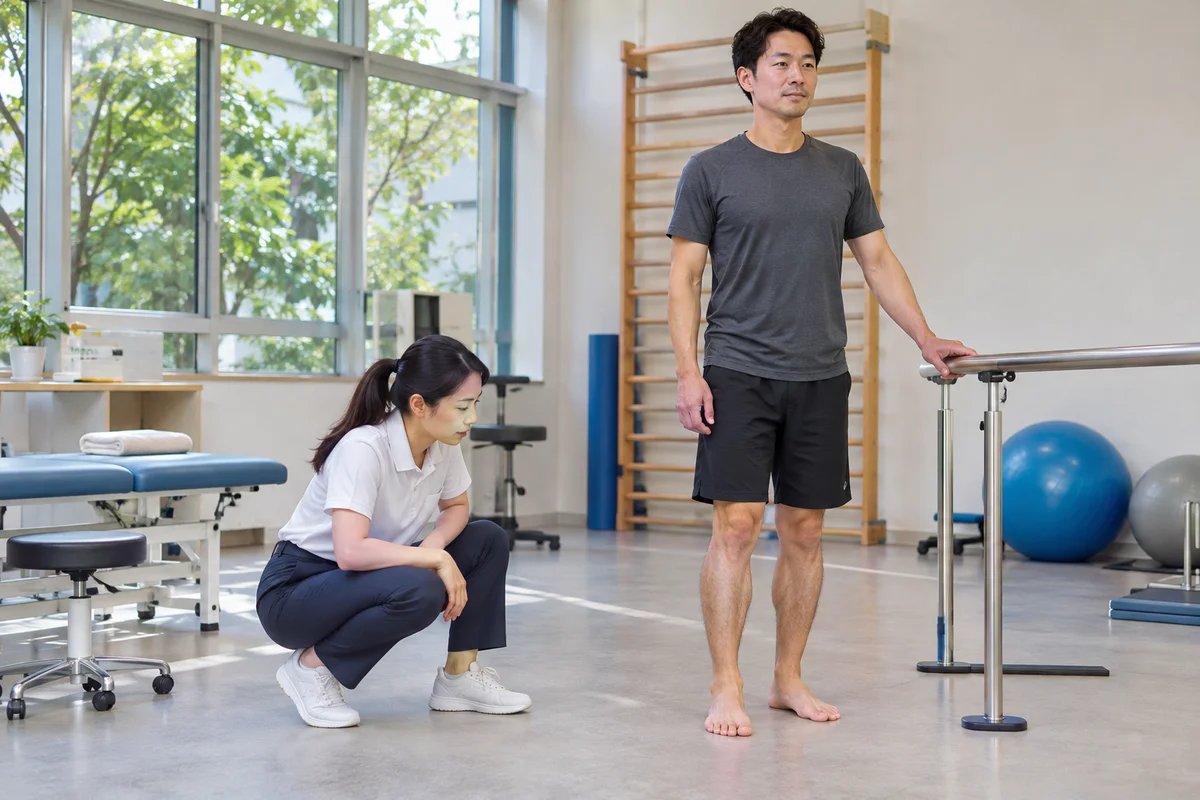
According to the ChoosePT patient guide, evaluation includes the history and examination of strength, balance, flexibility, foot and ankle movement, and walking. The therapist also screens for other causes and can coordinate further medical assessment or imaging when needed.
Whether the foot remains flexible or has become stiff matters to treatment. In a flexible foot, support and selected exercise may improve useful loading; a stiff, more advanced deformity may need greater protection and specialist input rather than stronger attempts to force its shape. AAOS distinguishes these care needs.
A clinician may assess a heel rise, but repeatedly forcing a painful single-leg heel rise at home does not establish a diagnosis. A recent injury, possible tendon tear or rapid functional change warrants assessment before strengthening.
How do shoes, inserts, braces and activity changes fit together?
Conservative care can combine activity modification, support and rehabilitation. This may mean reducing an activity that repeatedly aggravates symptoms while discussing a more tolerable way to remain active. Simply adding exercises without addressing the load on the painful foot can miss an important part of the plan.
An insert fits inside the shoe to support and position the foot; an ankle brace also supports the ankle and back of the foot. A walking boot restricts movement to protect the painful tissues for a clinician-selected period. These devices are not interchangeable. The choice depends on shape, flexibility, symptoms and the degree of change, and some people need protection before exercise progresses.
The Royal National Orthopaedic Hospital’s patient leaflet describes early conservative options and more advanced stages, rather than one device or timetable for everyone. Support needs to fit the footwear and have a review point; this guide does not establish that a clinic supplies custom devices.
What kinds of physical therapy exercises may be used?
The exercise question is which movements and loads fit your assessed foot. AAOS describes strengthening as potentially helpful in mild posterior tibial tendon disease, with calf and Achilles flexibility also relevant. ChoosePT describes a program selected for the diagnosed stage, needs and goals. Useful components may include:
- Foot, ankle and leg strengthening. A therapist may select movement against body weight or another form of resistance, then adjust the direction, resistance and support. The aim is to develop useful capacity without treating a painful full-body-weight exercise as a compulsory starting test.
- Calf and ankle mobility. If examination identifies tightness, the therapist can teach an appropriate stretch and check foot position and comfort. More force is not automatically better.
- Balance practice. The level of support and challenge can be chosen so that you can control the task rather than repeatedly lose your position.
- Walking practice. Gait training addresses how the foot and leg work during the activities you need, alongside the selected footwear or support.
The therapist demonstrates selected movements and observes you repeat them, explaining the purpose, position, support, range, resistance, amount and frequency, and when to adjust or stop. These are treatment choices, not a universal routine or promise to rebuild an arch. Our mobility and home-practice guide connects selected exercises to everyday tasks.
What can selected strengthening and stretching involve?
The Belfast Trust painful-flat-foot leaflet describes heel-raise options, including a seated start when standing is too demanding. AAOS also describes wall calf stretching. These examples need selection for the assessed stage and permitted load. The therapist sets the version, range, resistance, hold, repetitions and frequency; a suspected tear or a prescribed period of immobilization changes what is appropriate.
- For a selected seated heel raise, sit in a stable chair with the feet supported on the floor. Keep the forefoot in contact, lift the heels slowly within the agreed range, then lower with control. The therapist checks whether this is tolerated before adding load or moving to a supported standing version. A painful single-leg raise is not the required starting point.
- For a selected wall calf stretch, use the wall for balance, with the affected leg behind you and the front knee bent. Keep the rear knee straight and heel down; move forward only to a comfortable calf stretch, then ease out. Use the foot position and hold taught by the therapist, without forcing the painful arch.
The raise practices calf-and-foot loading capacity; the stretch addresses an assessed restriction in calf flexibility. Balance and walking practice have different goals: controlling a task and using the chosen support during daily movement. Review the familiar walking or standing task and later pain or swelling before increasing a demand. More exercise is not evidence that the arch has been structurally restored.
How should progress be reviewed?
Choose a practical comparison, such as walking your usual route or standing through a task with less difficulty. Review pain, swelling, walking tolerance, strength and how the support is working. A change in comfort does not by itself show that a tendon has healed or the foot’s alignment has normalized.
Persistent difficulty, increasing stiffness or further change in shape should lead to reassessment. More advanced or rigid problems may need specialist foot-and-ankle input, and surgery is considered for some patients when appropriate conservative care has not helped. That decision depends on the individual condition; it is not a fixed deadline reached by everyone.
Does this also cover other foot and ankle problems?
A painful heel, an outer-ankle ligament injury and symptomatic adult-acquired flatfoot have different assessment and treatment questions. Our plantar heel pain guide and ankle sprain guide address those separate situations. A child’s flat feet, a fresh rupture and a postoperative foot require their own advice. Follow the treating team’s protection and surgical instructions rather than applying this overview.
Seek urgent assessment for severe ankle pain, inability to walk, a new abnormal shape after injury, or a snap followed by loss of function. NHS ankle-pain guidance treats these as reasons for urgent help. Foot pain with diabetes, or new tingling or loss of feeling, also needs medical review rather than assuming it is simply flatfoot.
Discuss the painful foot and your walking goals
Wongs Acupuncture & Angel Alliance Physical Therapy offers physical therapy in Midtown Manhattan, Forest Hills and Great Neck. Assessment uses symptoms, diagnosis and activity goals. Pain may also prompt a separate acupuncture consultation; the research here does not establish acupuncture treatment of PTTD or restoration of the arch.
OUR LOCATIONS
Choose a clinic.
Choose a convenient location to discuss your needs or arrange a visit.