
HEALTH JOURNAL
After a Broken Wrist: Physical Therapy and Daily Use
Dr. Wei (Sean) Li · · Updated
Physical therapy after a broken wrist helps you work on stiffness, strength and useful hand movement while respecting the fracture’s healing requirements. What you can practice depends on the bone that broke, its alignment, the treatment you received and your current restrictions. Removing a cast or feeling less pain does not automatically mean the wrist is ready for heavy lifting.
This guide focuses on a diagnosed distal radius fracture, including a Colles fracture. It explains how rehabilitation decisions connect to everyday use of the hand, rather than giving one exercise timetable for every broken wrist.
On this page
What has actually broken?
The radius is the forearm bone on the thumb side. A distal radius fracture occurs near the wrist. A Colles fracture is one pattern in which the broken end tilts backward; it is not another name for every wrist fracture. The AAOS broken-wrist guide explains these distinctions.
A break may extend into the joint, involve several pieces or accompany an ulna fracture. Some fractures are treated with a cast; others need an operation to restore alignment and hold the pieces in position. These differences affect what must be protected. Bring the diagnosis, operation details if relevant, and the latest movement and loading instructions to your therapist.
How do protection and movement fit together?
Early recovery must allow the fracture to heal without losing sight of the joints and activities around it. AAOS advises working on finger movement after surgery or casting. Tell the fracture team promptly if pain or swelling prevents you from moving the fingers fully; a cast or dressing may need review. Do not remove or alter the support yourself to make an exercise easier.
The current plan states permitted movements, splint use and the weight allowed through the hand. Lifting restrictions also matter when pushing up from a chair or leaning on the palm. Comfort during a movement does not establish that it is permitted at this healing stage.
What can wrist-fracture exercises work on?
After cast removal, the wrist may feel stiff and weak. The NHS recovery guide describes physiotherapy as a way to help with these problems, which can persist for months. Exercises are selected around the examination and the fracture team’s instructions.
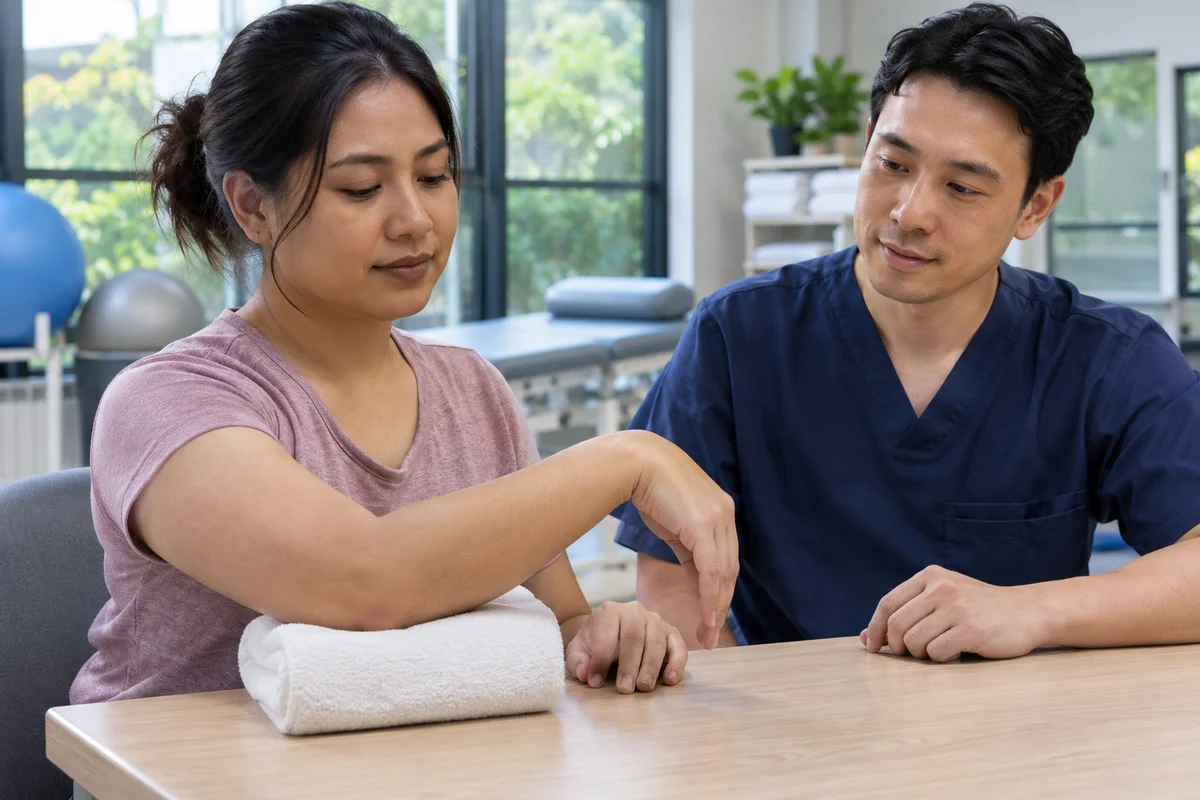
Once the fracture team permits wrist and forearm movement, examples described in Worcestershire Acute Hospitals’ rehabilitation guide include supported wrist bending and forearm turning. For wrist bending, support the forearm on a table with the hand beyond its edge, then slowly lower and raise the hand through the selected range.
For forearm turning, keep the elbow bent near your side and forearm supported, then turn the palm down, return and turn it up. The therapist checks the version and permitted range and sets the amount; these are movement examples, not instructions to force a stretch or add a weight.
| Priority | What to discuss with your therapist |
|---|---|
| Regaining movement | Which wrist and forearm movements are restricted, and which are safe to begin. Bending the wrist and turning the palm are different movements; the permitted range and assistance need to be clear. |
| Rebuilding strength | When resistance or gripping work can be introduced, what starting demand is appropriate, and which loads remain restricted. |
| Using the hand | How the plan relates to dressing, handling a cup, turning a key or another task that matters to you. |
For example, being able to hold an empty cup does not establish that you can safely lift a full kettle. Describe the weight, grip and repetition involved in your goal. Your therapist can separate the motion needed for that task from the load that the healing wrist must tolerate.
These priorities do not prescribe stretches or weights for you. Following surgery, the starting point may differ from rehabilitation after a cast. AAOS describes different arrangements after surgery and cast treatment, with PT started when the doctor considers it necessary. Your own instructions determine when movement and loading can progress.
Make the home plan usable
The home instructions specify starting position, direction, support, amount and frequency. The therapist demonstrates an unfamiliar movement and watches you reproduce it, then explains the acceptable discomfort and symptoms for pausing or contacting the team at this recovery stage.
Keep the instructions with current restrictions; changes in a cast or splint require reviewing the exercise plan. Do not add resistance or force the wrist farther because an online demonstration looks similar. Our home exercise guide explains recording the plan and useful response information.
What counts as progress, and how long does it take?
Bone healing, comfortable movement and demanding hand use do not necessarily recover together. AAOS describes about three months for many distal radius fractures to heal enough for usual activities and up to a year for full recovery, with stiffness sometimes improving even later. The fracture, treatment and your health affect this course. These time ranges do not by themselves clear heavy activity or explain worsening symptoms; your own follow-up determines the allowed progression.
Compare one permitted activity under similar conditions: how you manage buttons, type for a usual period or handle a light object. Note symptoms separately from function, including swelling and the later response. Agree on what change you aim to see before the next review and what would require adjusting the plan. The rehabilitation overview explains how everyday goals and medical restrictions fit together.
When should the fracture team review the wrist?
New finger numbness after a wrist injury needs emergency-room assessment right away. AAOS also identifies severe ongoing or worsening pain and new weakness or difficulty bending the thumb or index finger as emergency concerns. Seek prompt medical advice for fingers becoming pale or blue, rapidly worsening swelling, or a cast that feels excessively tight. Fever, discharge or a bad smell from under a cast also needs prompt contact. Do not try harder stretching or wait for a routine PT visit to address these changes.
Keep fracture follow-ups even when more comfortable. The team determines readiness for driving, heavy lifting and sport. A fracture after a minor fall, especially in an older adult, may call for medical bone-health assessment. Restoring function and preventing another fracture address different recovery needs.
Preparing for a physical therapy assessment
Explore physical therapy at Wongs Acupuncture & Angel Alliance Physical Therapy in Manhattan, Forest Hills and Great Neck. Bring your fracture reports, restrictions and a daily-use goal. Allow approximately 75–90 minutes for an initial PT visit and confirm insurance requirements with the office. An acupuncture consultation may be discussed separately for an assessed pain concern; it does not replace fracture follow-up or clearance to load the wrist.
OUR LOCATIONS
Choose a clinic.
Choose a convenient location to discuss your needs or arrange a visit.