
HEALTH JOURNAL
Rebuilding Arm Use After a Humerus Fracture
Dr. Wei (Sean) Li · · Updated
Physical therapy after a humerus fracture helps restore arm movement and useful function while respecting the bone’s current protection needs. The humerus is the upper-arm bone. A fracture near its top, at the shoulder, is different from one through the shaft or near the elbow. This guide focuses on the transition from protection to everyday arm use, especially after a proximal humerus fracture; it is not a universal exercise protocol. Orthopaedic Trauma Association proximal-humerus guide
On this page
Less pain is not the same as full bone strength
Pain may improve before a fracture is strong enough to tolerate normal stress. Some movement or loading limits can therefore continue after a cast or brace is removed. Bone healing also varies with the location and extent of injury, age, and other medical conditions. A general week-by-week chart cannot settle these decisions. AAOS fracture-care guidance
This matters in everyday choices. Holding a light cup and pushing up from a chair place different demands on an injured arm. The restriction must be translated into the actual task, including reaching, lifting and pushing, rather than judged by the small weight of an object alone.
A proximal humerus fracture may be treated with or without surgery. The fracture pattern and treatment determine sling use and the permitted shoulder movements. Instructions for fixation or a shoulder replacement should not be replaced with a general shoulder workout. AAOS shoulder-fracture guidance
Recover available movement without forcing the endpoint
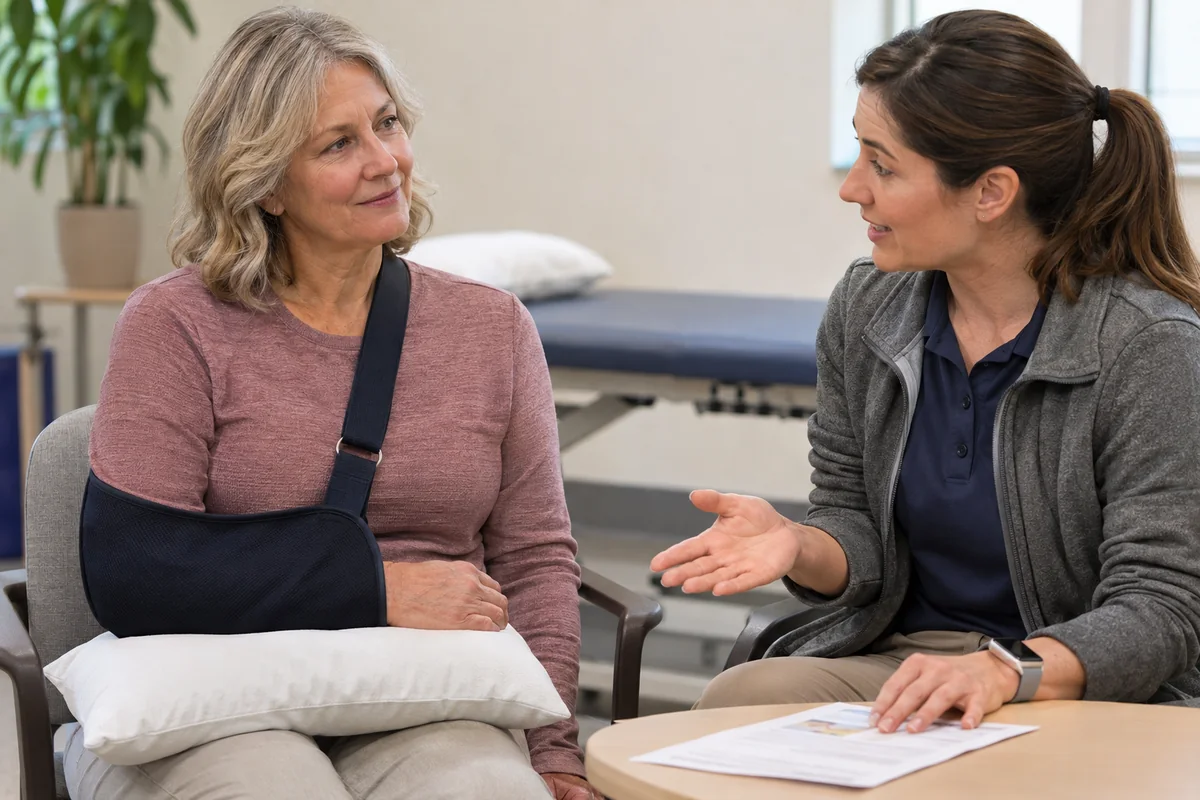
A sling and a period of reduced arm use can leave the shoulder stiff and the arm weaker. Follow the current instructions for the elbow, wrist, and hand as well as the shoulder. Once a movement is permitted, a therapist can measure the available range and select controlled practice. The first goal may be bringing the hand toward the mouth or managing a sleeve without forcing the injured shoulder. Orthopaedic Trauma Association proximal-humerus guide
Mobility, control and strength have different jobs. Permitted mobility practice addresses the shoulder range needed for a task; control practice helps you use that range without forcing the endpoint. Strength and endurance work is added when the healing tissues can accept the selected load. The therapist demonstrates the chosen version, watches you repeat it and explains what amount to practice and what response should prompt contact. Compare a permitted task and its later effects before increasing the demand.
A stiff shoulder does not need to be forced to its maximum in the first session. The plan distinguishes an expected sense of tightness from sharp, escalating, or otherwise concerning pain. A new response needs review rather than a contest with the joint.
Loading is a separate progression
Permission to move the shoulder is not automatically permission to lift, push, or bear body weight through the arm. Pushing up from a chair can load the shoulder differently from holding a light cup. These daily actions need to fit the current restrictions.
Strengthening follows the permitted range and load. A therapist can change the task as healing and control improve. Exercises for a rotator cuff problem or an elbow injury are not interchangeable with fracture rehabilitation simply because they use the same arm.
Return to a task in stages
Reaching higher, carrying and returning to work require more than an improved motion measurement. They may need endurance and strength that the arm has not yet regained. The Orthopaedic Trauma Association’s proximal-humerus guide describes bone healing over about three to four months, with functional recovery and therapy potentially continuing for months. Some people have residual stiffness or soreness. These are general expectations, not permission to lift at a particular date; the medical team continues to assess healing while tasks progress.
New arm or hand numbness, a cold or discolored hand, or severe and increasing pain needs immediate medical assessment. NHS arm-fracture guidance directs emergency assessment for new numbness or a change in arm color after an injury. A new loss of function also warrants review. If the fracture followed a low-impact fall, bone health may need medical assessment. This article does not supply a shaft-fracture, elbow-fracture or postoperative shoulder-replacement protocol.
Make follow-up instructions usable
At Wongs Acupuncture & Angel Alliance Physical Therapy, physical therapy can turn current fracture restrictions into specific movement and daily arm-use goals. An acupuncture consultation can review appropriate pain-care options, while bone healing and loading decisions remain linked to the treating medical team. This overview does not replace a fracture-site-specific protocol or postoperative repair plan.
OUR LOCATIONS
Choose a clinic.
Choose a convenient location to discuss your needs or arrange a visit.