
HEALTH JOURNAL
Knee Osteoarthritis: Building a Useful Physical Therapy Plan
Dr. Wei (Sean) Li · · Updated
Physical therapy can help people with knee osteoarthritis work toward less pain and better everyday function through a tailored exercise plan, education and practical activity adjustments. The goal is to make tasks such as walking, using stairs and getting up from a chair more manageable.
The useful plan depends on the knee problem that has been assessed, your current abilities and what you want to do. Knee osteoarthritis, a new injury and an unexplained swollen knee should not automatically receive the same exercise instructions.
On this page
- What should be checked before choosing exercises?
- How can physical therapy help an arthritic knee?
- Which physical therapy exercises are used for knee osteoarthritis?
- What if exercise makes the knee uncomfortable?
- What makes a home plan usable?
- Where do hands-on care and acupuncture fit?
- When should the plan be reviewed?
- Arrange an assessment around the activity that matters
What should be checked before choosing exercises?
Begin with the diagnosis and the activity that is difficult. Osteoarthritis involves changes in the knee joint, but knee pain has other possible causes. HSS’s knee-arthritis guide distinguishes osteoarthritis from other problems and explains why an assessment matters.
Pain and stiffness can lead to less activity, followed by weakness and less control of the knee. HSS describes this connection. Strength practice addresses the muscles that help you manage loading; movement exercises address a restricted bend or straightening range; aerobic activity builds tolerance for sustained activity. These targets explain why useful function can improve while the joint still has osteoarthritis.
Bring relevant reports, previous treatment details and any surgical restrictions. Explain whether pain appears during a walk, on stairs, after sitting or at night, and mention swelling, locking, giving way or a recent injury. A new or substantially changed problem needs review rather than an assumption that it is just another arthritis flare.
An X-ray is not always needed to establish ordinary osteoarthritis. The NICE osteoarthritis guideline advises that diagnosis is usually clinical and nonsurgical management should be guided by symptoms and physical function. Atypical features can change the need for investigation. The aim is an appropriate assessment, rather than a new scan before every plan adjustment.
How can physical therapy help an arthritic knee?
Therapeutic exercise is a core part of osteoarthritis management. The 2026 American College of Rheumatology summary recommends exercise for knee OA and referral to PT when pain, fatigue or functional limits interfere with exercise or daily activities. NICE recommends a tailored plan that includes local muscle strengthening and general aerobic fitness, with supervised sessions as an option. Regular practice can improve pain, function and quality of life. The specific movement and starting demand still follow the person’s assessment.
A 2020 randomized trial in the US Military Health System assigned 156 people to PT or a knee-joint glucocorticoid injection. At one year, the average WOMAC score was 37.0 after PT and 55.8 after injection, a difference of 18.8 points favoring PT. This scale runs from 0 to 240, with higher scores indicating worse pain, stiffness and function.
The result concerns the PT care used in that study compared with injection care, not a finding that one particular exercise is best. It measured symptoms and function, rather than cartilage regrowth. Medical treatment can still have a role in an individual plan.
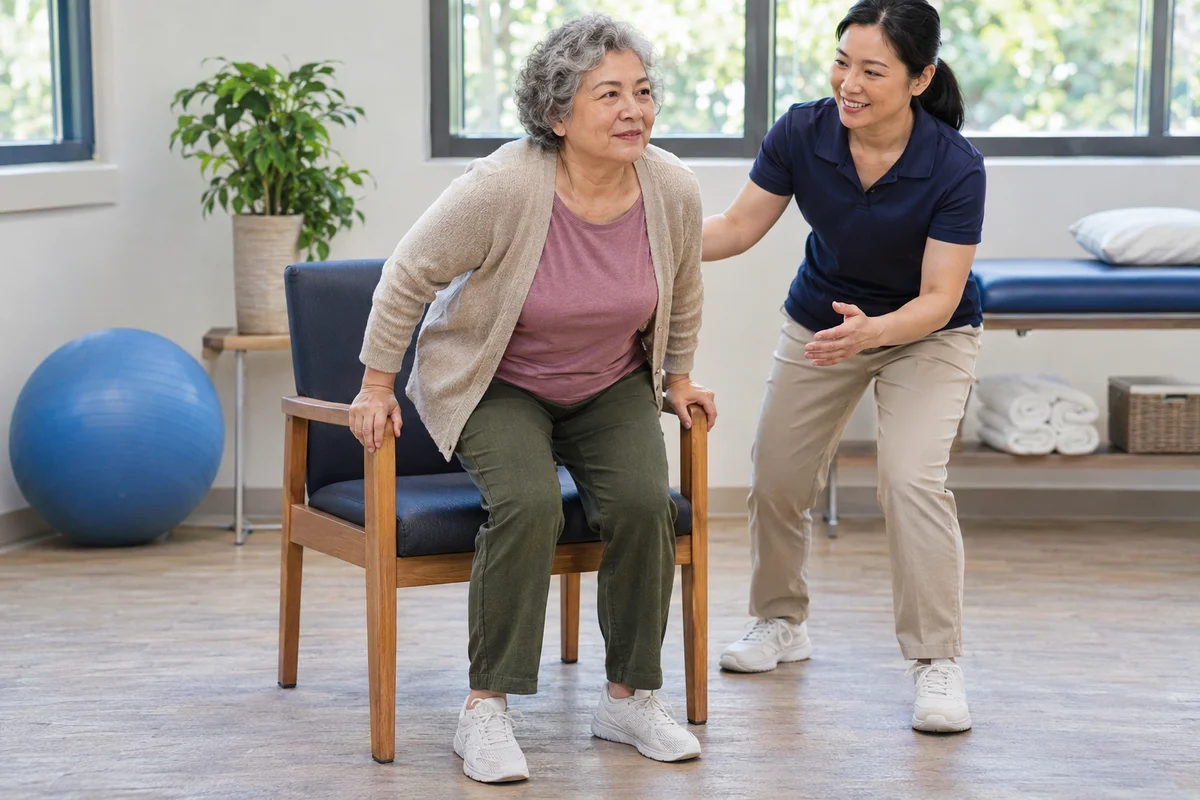
A physical therapist can connect those broad goals to your actual difficulty. If rising from a chair is the problem, the discussion may include leg strength, the movement itself and how you use support. If a walk becomes difficult after a short distance, the plan may address an appropriate starting amount and how to build it. A symptom score is useful alongside what you can do, rather than replacing it.
These are goals for active rehabilitation. An easier walk can be valuable without demonstrating that the joint has returned to its earlier structure. Pain relief, strength, movement and the need for other medical care are related but distinct outcomes.
Which physical therapy exercises are used for knee osteoarthritis?
A plan commonly brings together movement, strengthening and general fitness. The Royal Orthopaedic Hospital’s knee-osteoarthritis exercise information illustrates options. The following examples explain what you might discuss; the therapist should select the starting version, amount and support for your abilities.
| Purpose | An example to discuss | What to clarify |
|---|---|---|
| Knee movement | Slowly bending and straightening the knee while lying down, within a comfortable range. | Which range and position suit the knee, and what to do if symptoms increase. |
| Thigh-muscle work | A towel-supported knee-straightening exercise using the front thigh muscles. | How to perform it correctly and whether resistance is appropriate. |
| An everyday task | Practicing a controlled rise from, and return to, a chair. | Chair height, balance and any hand support needed before trying it independently. |
| Aerobic activity | An appropriate amount of walking, cycling or swimming. | Starting duration, access, comfort and how it fits other health conditions. |
These are possibilities, not a requirement to perform everything. The therapist observes technique and selects useful starting choices. Difficulty with floor access, a safe support or balance should be addressed before choosing the home version.
The Royal Orthopaedic Hospital instructions include a towel-supported knee extension, which practices the front thigh muscle through part of the straightening movement. If selected after assessment, the therapist checks the setup and range, then sets the repetitions, hold time and frequency:
- Lie on your back and place a small rolled towel behind the knee.
- Keep the knee supported on the towel. Tighten the front thigh muscle and lift the foot as the knee straightens through the selected range.
- Lower the foot slowly and relax, using the amount agreed for your plan.
- Report the response during practice and later, including swelling or harder walking. Change the version or dose with the therapist if needed.
What if exercise makes the knee uncomfortable?
Some initial pain or discomfort can occur when therapeutic exercise begins; NICE specifically advises discussing this. That does not mean every increase should be ignored. The Royal Orthopaedic Hospital advises allowing exercise-related pain to settle and reducing the amount during a flare, with professional advice if exercises cause problems.
Describe the knee during movement and later in the day, swelling changes and whether ordinary walking is harder afterward. These details help distinguish an exercise needing adjustment from a change needing reassessment. A response plan is more useful than an instruction to push through pain.
Progression changes a selected variable, such as duration, repetitions, resistance or task difficulty, with guidance on staying at the current level or contacting the therapist. Increasing everything together makes the response harder to interpret. The starting amount and next step remain individualized.
What makes a home plan usable?
The home plan states the movement, starting amount, frequency, support and adjustment instructions. The therapist demonstrates unfamiliar exercises, checks that you can reproduce them and records the details in a usable form. A small plan that fits the day can be more practical than a long list that cannot be carried out consistently.
Connect exercise with a normal activity. For example, a hypothetical person may want to walk to a nearby shop without stopping at the same point each time. The plan can use that familiar route as a discussion measure while building suitable exercise. It is an example of setting a goal, not a prediction of how quickly a knee will improve.
At follow-up, bring a simple record of the activity, symptoms, exercise and important changes in medicines or workload. If weight management is appropriate, discuss individualized support as part of the broader plan; it is not a condition you must meet before asking for help with movement.
Where do hands-on care and acupuncture fit?
Hands-on treatment may be used alongside exercise when appropriate for the assessed knee. NICE places manual therapy within a plan that includes therapeutic exercise; the movement program remains a central part of osteoarthritis care.
Acupuncture is a separate pain-care discussion. The 2026 ACR summary conditionally recommends it for knee OA, meaning it is an option to discuss according to the person’s symptoms, preferences and other care. NICE recommends against offering acupuncture for osteoarthritis. Our knee-pain acupuncture guide explains those positions and specific treatment research. Rehabilitation continues to track movement, strength and useful tasks.
When should the plan be reviewed?
Agree on when to compare the original activity and how to seek help sooner. NICE advises follow-up when management is not working within the agreed period or the approach is difficult to use. A review can address technique, exercise amount, barriers or a changed assessment; follow-up frequency can change with your ability to use the plan, symptoms and activity tolerance.
Severe pain, a hot or markedly swollen knee, inability to bear weight or a significant new injury need prompt medical assessment rather than simply stronger exercise. Persistent limitations may also warrant discussion of other treatment options. Seeking a surgical opinion when appropriate does not mean an earlier rehabilitation effort was pointless.
Arrange an assessment around the activity that matters
Our physical therapy service is available in Manhattan, Forest Hills and Great Neck. Assessment uses the knee diagnosis, relevant records and a practical goal. A separate acupuncture consultation can consider pain within current care. The selected clinic confirms appointments and individual insurance benefits.
OUR LOCATIONS
Choose a clinic.
Choose a convenient location to discuss your needs or arrange a visit.