
HEALTH JOURNAL
Let the Operation Guide Your Bunion Rehabilitation
Physical therapy after bunion surgery builds permitted movement, strength and walking while protecting the surgical correction. The operation, bone healing and current surgical instructions determine when you can bear weight, which joints may move and what footwear is allowed. A small incision or less pain alone does not establish readiness for more loading. Source
On this page
- What the operation changed and what still has to heal
- A fused joint is different from a stiff joint that may move
- What the first PT assessment needs to establish
- Permission to walk is not permission to walk normally
- Restore only the movement that has been cleared
- Strength, balance and walking control have separate goals
- Build walking endurance without changing everything at once
- How recovery time and swelling should guide review
- Changes that need medical attention
- A PT plan connected to the surgical follow-up
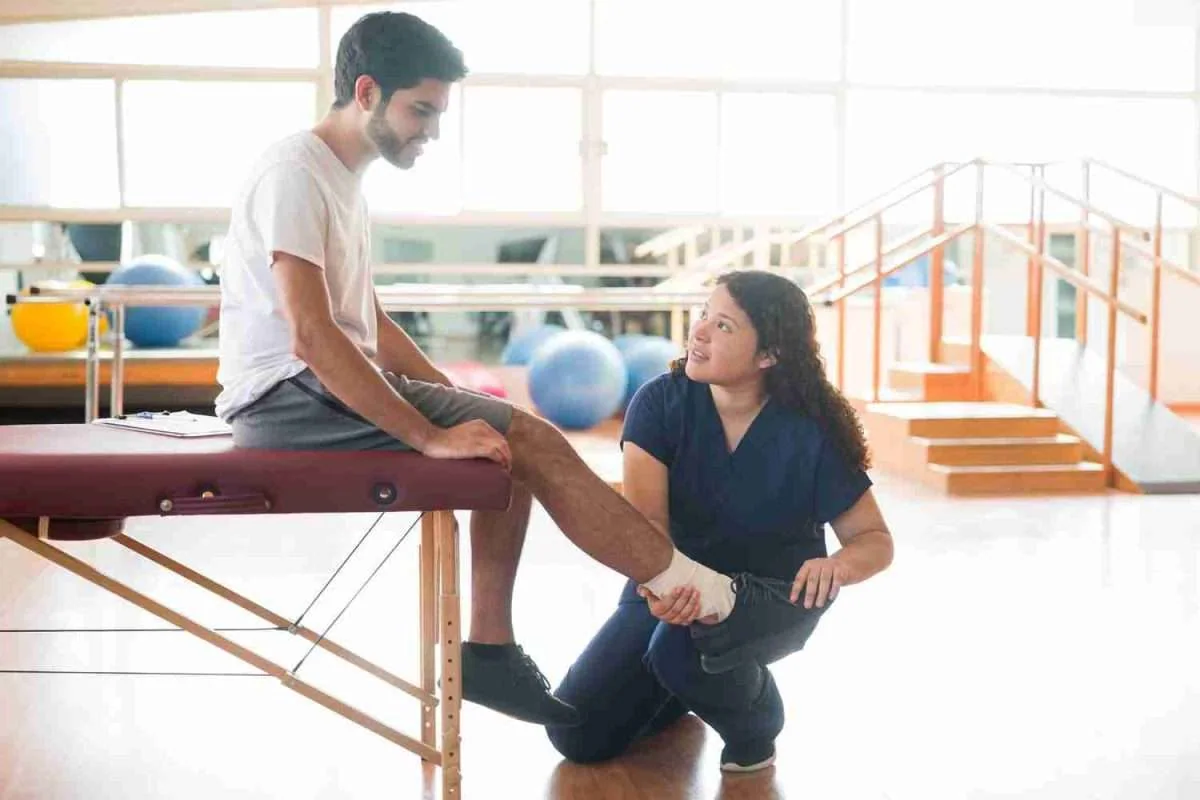
What the operation changed and what still has to heal
Bunion correction may involve cutting and repositioning a bone, called an osteotomy, as well as balancing the surrounding soft tissues. Screws, plates or pins hold the corrected position while healing takes place. They do not make a newly cut bone immediately ready for unrestricted standing or push-off through the front of the foot. Source
A minimally invasive operation can still involve bone cuts and internal fixation. The size of the skin incision does not reveal all the structures that need protection. The surgical report and current instructions are therefore more useful for planning therapy than the appearance of the scar or another person’s recovery schedule.
A fused joint is different from a stiff joint that may move
Fusion intentionally joins the bones on either side of a joint so that the joint no longer moves. If the joint at the base of the big toe is fused, therapy should not try to restore movement through that fused joint. This is different from a preserved joint that has become stiff and may be allowed to regain motion. Source
The location matters. A Lapidus procedure fuses the first tarsometatarsal joint farther back in the midfoot, not the same joint as the big-toe base. Other joints may still be movable, but their timing and permitted range depend on the complete operation and surgical instructions. The treating team should identify the operated and protected joints before beginning a toe-mobility exercise. Lapidus procedure
What the first PT assessment needs to establish
The therapist needs the procedure details, current weight-bearing and movement restrictions, footwear or brace requirements and follow-up findings. Assessment then connects wound and swelling status, permitted joint motion, muscle performance and walking to those boundaries. If instructions conflict, clarify them with the surgical team before adding the disputed movement.
Daily tasks belong in this assessment: getting out of a chair, reaching the bathroom, using stairs and managing crutches or another prescribed aid. Early progress may mean completing a transfer safely without loading the operated foot, rather than increasing a toe angle. The existing postoperative physical therapy guide explains coordination across operations; this article applies that approach specifically to bunion correction.
Permission to walk is not permission to walk normally
Some procedures allow early protected weight-bearing in a surgical shoe; others require a period without weight on that foot. Even permission to bear weight may include a specific route of loading or aid. Do not borrow a heel-walking instruction from a different procedure. The Royal National Orthopaedic Hospital describes protected walking and different movement instructions for different forefoot operations. Forefoot surgery advice
Therapy can practice the approved pattern with the prescribed shoe, boot and aid, including turning and stairs. Loading too early can shift healing bones, lose the correction or prevent union. Permission for a short protected walk also does not establish readiness to drive: the operated side, footwear, safe braking and the surgical team’s advice must be considered separately. Source
Restore only the movement that has been cleared
Dressings may help protect the corrected position as well as the wound. Do not remove or loosen them to gain more movement, and follow the surgical team’s instructions about keeping the wound dry. A closed-looking skin surface does not by itself clear all the deeper tissues for stretching. Source
Once a specific joint movement is allowed, the therapist can select a supported position and a tolerable range, then review control and the later response before increasing it. Toe and ankle exercises have different purposes and restrictions. The hospital guidance encourages toe motion after some osteotomies but notes that other operations may prohibit it; this is why no single bending routine fits every bunion operation. Operation-specific movement advice
Strength, balance and walking control have separate goals
After the appropriate clearance, strengthening aims to rebuild the capacity of the foot, ankle and calf to manage the loads needed for daily tasks. The therapist may also assess the hip and knee when weakness or shifting effort to other areas to avoid the operated foot affects walking. Exercise choice, resistance and repetitions should match what is allowed; a standing calf raise, lifting the heel, is not an automatic early exercise just because it appears in a general foot program.
Coordination and balance address how that capacity is used: controlling a step, placing the foot safely and gradually reducing an approved walking aid without creating a marked limp. Progressing push-off through the forefoot requires the relevant loading clearance. The goal is useful, controlled movement within healing limits, not making the foot sore enough to prove that training worked. Source
Build walking endurance without changing everything at once
A short approved walk on a level surface provides a different challenge from a longer outing, a new shoe or uneven ground. After the surgical team permits the next stage, therapy can build walking duration and everyday standing tolerance in manageable steps. Avoid increasing distance, changing footwear and adding uneven surfaces together, because a flare then becomes harder to interpret.
Review the whole day, including commuting and time standing at home, rather than only the exercise session. A shoe that accommodates swelling and supports the foot may still be needed even when a favorite shoe feels tempting. Returning to ordinary footwear after a fusion may depend on follow-up imaging as well as symptoms; the Lapidus hospital guide explicitly connects shoe progression with evidence of fusion. Healing and footwear progression
How recovery time and swelling should guide review
The American Academy of Orthopaedic Surgeons (AAOS) notes that full recovery can take up to six months and swelling may last six months to a year. These are broad recovery descriptions, not permission to start a particular exercise at a fixed week. Different operations and complications can change the course. Follow the individual elevation and swelling-management instructions. Source
At review, compare the same useful tasks: an approved walk, a transfer or a permitted movement. Consider pain, swelling, wound changes, movement quality and how the foot responds later and the next day, together with medical follow-up. Persistent worsening may require reducing or changing the current load and contacting the team. Swelling alone does not prove that all activity must stop, and less swelling does not prove that bone healing is complete.
Changes that need medical attention
Increasing wound redness, warmth or drainage, fever, chills or worsening pain should prompt contact with the surgical team according to the discharge instructions. A new painful or swollen calf needs urgent medical assessment. Sudden shortness of breath or chest pain requires emergency help. Do not treat these changes as ordinary exercise soreness, or try to work through them with stretching or direct massage. Source
A PT plan connected to the surgical follow-up
Wongs Acupuncture & Angel Alliance Physical Therapy offers physical therapy in Manhattan, Forest Hills and Great Neck. Bring the current surgical instructions and explain the daily task you are trying to regain. The plan can connect protection with permitted motion, strength, walking control and endurance as the surgical team clears progression.
If acupuncture is considered separately for pain, its timing and location must fit wound healing, medications and surgical precautions. It does not replace follow-up, establish bone union or change a weight-bearing restriction.
OUR LOCATIONS
Choose a clinic.
Choose a convenient location to discuss your needs or arrange a visit.