
HEALTH JOURNAL
Physical Therapy After Total Knee Replacement: Goals and Progress
Dr. Wei (Sean) Li · · Updated
Physical therapy after total knee replacement helps rebuild knee movement, strength and the ability to walk and manage daily tasks. The plan follows your operation and medical instructions, then progresses according to function and your response. A useful recovery plan explains what each exercise is for, how much activity to attempt and when to contact the surgical team.
This guide concerns rehabilitation after a primary total knee replacement, also called total knee arthroplasty or TKA. Partial replacement, revision surgery and complications may require different arrangements. It is not a week-by-week postoperative protocol.
On this page
What information should follow you from surgery?
Bring discharge instructions, operation details, medication information and restrictions on weight bearing or knee movement. Explain walking-aid use, support at home and difficult tasks. Conflicting instructions from different appointments require treating-team coordination before changing activity.
Rehabilitation may begin in the hospital and continue in a setting chosen for your needs. The NHS knee replacement recovery guide describes help with walking, home exercises and everyday activity. Its hospital arrangements and suggested dates are examples from that health system, not your personal discharge plan.
An outpatient PT appointment is one part of this pathway. It does not establish that the clinic provides inpatient rehabilitation or home visits. Our rehabilitation overview explains these settings and how restrictions fit into a movement plan.
Why does the plan address more than bending the knee?
The 2026 APTA total knee arthroplasty guideline recommends motion exercises, movement training and progressive resistance exercise: gradually increasing the muscular challenge against body weight or external resistance. These address different limitations. Increasing bending alone does not answer whether you can walk steadily or rise from your usual chair.
Movement and swelling
The therapist checks how the knee bends and straightens and how symptoms affect movement. Appropriate active or assisted motion can be part of the plan. Report a change that makes movement more difficult rather than repeatedly pushing to achieve someone else’s range target.
Swelling and pain affect activity. The plan explains pacing and recommended comfort measures, with response reviewed alongside pain, soreness, motion, swelling and reported function. The guideline describes these observations together as guides to exercise progression.
Strength and everyday movement
Strengthening develops the capacity needed for standing up, walking and stairs. Early exercises may look simple, such as learning to tighten the thigh muscle effectively. Later resistance and task demands should match your recovery. The AAOS exercise guide gives examples and asks patients to check with their surgeon or therapist before using them.
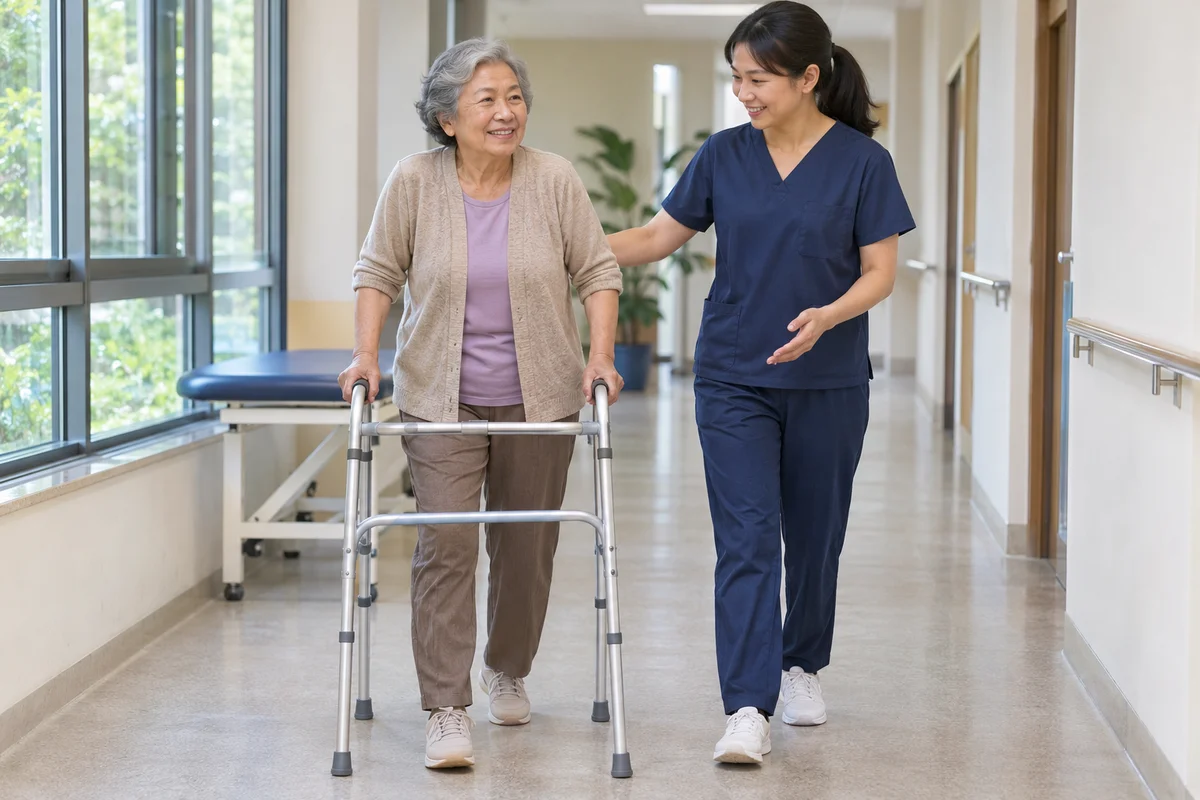
Walking practice considers balance, movement pattern and correct aid use. The team reviews stability and readiness before reducing support. Eagerness to walk unaided does not establish safe readiness. Home stairs, bathroom access and actual walking distances inform practice.
What can early movement and muscle exercises look like?
The AAOS exercise guide includes thigh-muscle contractions and bed-supported knee bending. Use only versions cleared by your surgical team. The therapist demonstrates the setup, watches you reproduce it and specifies the permitted range, hold time, repetitions and frequency.
- For a thigh-muscle contraction, lie or sit with the operated leg supported. Tighten the muscle at the front of the thigh and gently work toward straightening the knee within the allowed range. Hold for the time in your plan, then relax.
- For a bed-supported knee bend, lie with your legs supported on the bed. Slide the operated-side heel toward your buttocks so the knee bends, keeping the heel on the bed. Stop at the agreed comfortable range, then slide the leg back toward straight.
Thigh tightening practices activating the muscle that helps control the knee. The heel slide practices knee movement. Later strengthening adds an appropriate challenge against body weight or external resistance; walking and task practice train how those abilities work together. Review pain, swelling, control and later response before increasing a demand.
How can you make the home program usable?
Before leaving, demonstrate the unfamiliar exercises and confirm the amount, frequency and any limits. Know which activities are exercises and which are additional demands, such as a long shopping trip or repeatedly climbing the stairs. A home plan should account for both.
For example, if a necessary outing leaves the knee more swollen, tell the therapist what the day included rather than reporting only the exercise repetitions. The next decision may involve the total activity load. Our home exercise guide explains how to organize instructions and feedback.
More equipment is not automatically better. The 2026 guideline recommends against routinely using a continuous passive motion machine for an uncomplicated primary TKA. That is a specific recommendation about a machine that moves the knee; it does not mean all assisted movement or every individually indicated device is inappropriate.
How long is PT needed, and what should improve?
PT commonly extends across weeks to months after knee replacement, with the amount of supervision changing as you regain safe movement and independence. As one US example, HSS describes outpatient rehabilitation continuing up to about four months after surgery, followed by continued prescribed exercise.
That is an example of a care pathway, not a fixed local course or a requirement to attend every week until that date. The operation, starting function, other health needs, home circumstances and response determine the plan. Supervised visits and home practice should each have a clear purpose.
Use the same ordinary tasks to review change:
| Task or observation | What to discuss |
|---|---|
| Walking | Distance, aid used, steadiness and whether a limp increases. |
| Chair and stairs | Support needed, control and the demands of your own home. |
| Knee movement | Bending and straightening alongside symptoms and function. |
| Later response | Swelling, pain and how the knee feels after activity and the next day. |
Increased symptoms need description and review, rather than assuming every worsening is normal. Review identifies what can progress, what still needs supervision and what calls for another surgical assessment. Fewer visits should still leave an understandable plan.
Does PT before replacement have a role?
If surgery is still ahead, the discussion is different. The 2026 guideline’s research synthesis reports improvements in strength, function and pain during the early postoperative period, up to roughly six weeks, after preoperative rehabilitation. The early advantages tend to become smaller over time. Preparation can include exercise for current limitations and understanding the recovery process; it does not establish that an otherwise appropriate operation can be avoided or delayed.
Which changes should prompt a call?
Follow the surgical team’s contact instructions. New calf or leg pain, fever, wound drainage, or redness, swelling or pain that is worsening needs prompt medical advice. These can indicate a clot or infection rather than an exercise problem. The NHS complications guide describes these warning signs.
Difficulty breathing or chest pain, especially with leg pain or swelling, needs emergency assessment. In the United States, call 911. Do not wait for the next PT visit or try another exercise to see if it improves.
Arrange the next stage of care
Explore outpatient physical therapy at Wongs Acupuncture & Angel Alliance Physical Therapy in Manhattan, Forest Hills and Great Neck. Bring your surgical plan and confirm the requested service, referral and insurance requirements. Allow approximately 75–90 minutes for an initial PT visit.
Knee-replacement rehabilitation follows the surgeon’s instructions, reviews walking, knee movement and strength, and provides a usable home program. Transport, stairs and available help at home affect the plan. Location is considered alongside those safety, mobility and practical needs.
If you wish to discuss separate symptom-focused care, an acupuncture consultation can be considered with attention to the recent operation and current medical instructions. It should not delay review of a possible complication.
OUR LOCATIONS
Choose a clinic.
Choose a convenient location to discuss your needs or arrange a visit.