
HEALTH JOURNAL
Shoulder Labral and SLAP Tears: Understanding Nonsurgical Rehabilitation
Dr. Wei (Sean) Li · · Updated
Physical therapy for a shoulder labral or SLAP tear can work on movement, strength and control so the arm functions better in everyday activity. It does not mean the torn tissue has been reattached. The plan depends on the tear, shoulder stability, other injuries and what you need to do. Many SLAP problems are first treated nonsurgically, with a review of whether function is improving.
This guide focuses on nonsurgical rehabilitation, especially for a diagnosed SLAP injury. A labral repair or biceps procedure changes the protection requirements and needs the surgeon’s instructions.
On this page
What is the labrum, and what does SLAP mean?
The labrum is a ring of firm soft tissue around the shoulder socket. It helps deepen the socket and provides attachment sites for supporting structures. It is different from the rotator cuff, the muscles and tendons around the shoulder.
SLAP means superior labrum anterior and posterior: a front-to-back tear in the upper labrum near the attachment of the long-head tendon of the biceps, the muscle at the front of the upper arm. The AAOS SLAP tear guide explains this anatomy. Tears in other labral locations are different injuries, so the identified tear location matters to care.
A sudden injury and gradual age-related fraying can also mean different things. A report that mentions the labrum needs to be considered with the symptoms and examination. Our rotator cuff guide addresses tendon-related pain and tears; a cuff exercise plan should not automatically become a labral treatment plan.
Does clicking or an MRI prove what is causing the pain?
Clicking, catching, pain with overhead movement and a feeling of instability can occur with SLAP injuries, but overlap with other shoulder problems. A sound or sensation alone does not establish the diagnosis. Tell the clinician about a fall, a dislocation, forceful pulling, repeated overhead activity or changes in strength and movement.
The examination considers movement, strength and stability, and may include the neck when symptoms suggest another source. MRI can show the labrum more clearly than an X-ray; in some cases, a special MRI study is used. The scan and examination answer related questions rather than substituting for each other.
The National Athletic Trainers’ Association position statement cautions against diagnosing a SLAP injury from a history of clicking or catching alone. Its recommendations concern athletes, particularly overhead athletes. They are useful context, but do not predict the outcome for every person with a labral finding.
What can nonsurgical rehabilitation work on?
A program connects the examination to the activity that is difficult. Relevant priorities can include shoulder motion, strength and endurance of the rotator cuff and muscles around the shoulder blade, and coordination during reaching or lifting. The NATA statement describes these rehabilitation components. Improvement after a combined program should be judged as the response to that program, rather than attributed automatically to one exercise.
The labrum helps deepen the socket, while the rotator cuff and surrounding muscles contribute to controlling the arm during movement. HSS describes this shared support role. Strength and endurance work can therefore target how the shoulder manages a reach or repeated load, while coordination work targets how the arm and shoulder blade move together. Useful function can improve without showing that the torn labrum has been reattached.
For example, reaching for an empty cup once is different from repeatedly lifting a loaded object overhead. Describe the height, weight and repetition that matter in your work or daily life. A starting task can be made easier before its demands increase. Avoid repeatedly testing a painful throw, heavy lift or unstable position simply to check whether the tear is still there.
A 2022 review of nonsurgical care for SLAP tears in athletes included five studies with 244 athletes. Overall, 53.7% returned to sport and 42.6% returned to their previous performance level. Those are different outcomes: being back in a sport does not necessarily mean being back at the same level.
Which exercises should you do?
The appropriate movement and resistance depend on the findings. Restricted motion may call for selected mobility work; a different person may need more attention to strength, endurance or control. The AAOS guide describes flexibility and strengthening within a nonsurgical program. It does not make one online routine suitable for every labral tear.
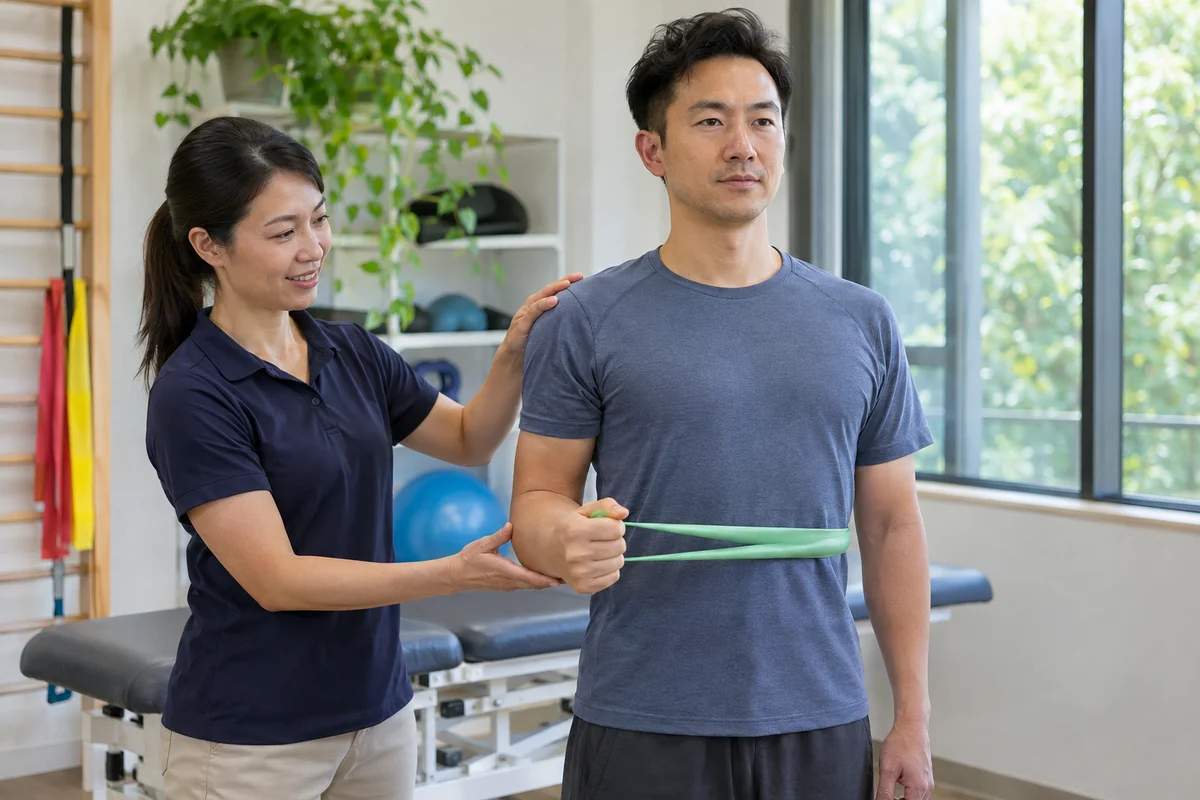
One possible rotator-cuff strengthening component is the AAOS arm-at-side external-rotation example. If selected for your shoulder, use the band resistance and secure attachment arranged by the therapist. Stand with the elbow bent and near your side, slowly turn the forearm outward at the shoulder, then return under control. The therapist checks range, stability and symptoms before setting the amount. This illustrates one muscle-training component, not a complete cuff protocol or a movement for every unstable or recently repaired shoulder.
The therapist demonstrates the selected home movement and watches you repeat it. Instructions specify position, range, resistance, amount, frequency and symptoms for pausing. A stretch suitable for one shoulder may not suit instability or different restrictions. Our home exercise guide explains how to record these details and useful feedback.
What should you track between visits?
Choose a repeatable task and record function separately from pain. Less discomfort can be helpful without proving tissue healing or readiness for a full sporting workload.
| Observation | A useful detail |
|---|---|
| Task tolerance | The height, load and number of repetitions you could manage. |
| Symptoms | When pain appears, how long it lasts and the later response. |
| Stability | A slipping or giving-way sensation, and the position in which it occurred. |
| Plan problems | An exercise you cannot perform comfortably or do not understand. |
The plan has a review point rather than a promised recovery after a set number of visits. AAOS describes a nonsurgical exercise program that may continue for three to six months; this is a general care period, not a requirement for the same number of weekly appointments or a reason to wait through worsening instability. Review the valued activities, symptoms and strength. Comfort at rest and readiness for repeated overhead work are different achievements.
When might the treatment pathway change?
If pain, instability or important activity limits persist despite an appropriate nonsurgical plan, an orthopedic discussion may be useful. The choice depends on the tear and the person’s circumstances. The HSS SLAP tear overview describes different procedures, including labral repair and procedures involving the biceps tendon. These do not create identical rehabilitation requirements.
After surgery, bring the operation details and restrictions before progressing exercise. When you may actively use the arm, load the biceps, add resistance or return to a particular task must fit the actual procedure. This nonsurgical guide is not a postoperative protocol. Our rehabilitation overview explains how medical restrictions and everyday goals are coordinated.
After a new injury with severe pain or a major loss of function, seek prompt medical assessment rather than testing the shoulder with exercises. New marked weakness or a significant change in stability also deserves review.
Planning a shoulder assessment
Explore physical therapy at Wongs Acupuncture & Angel Alliance Physical Therapy in Manhattan, Forest Hills and Great Neck. Bring the reports you already have, any surgical instructions and a description of the activity that is difficult. Allow approximately 75–90 minutes for an initial PT visit and confirm referral or insurance requirements with the chosen office.
An acupuncture consultation can be discussed separately for a pain concern after assessment. It is an additional care discussion, not evidence that needling repairs a labral tear.
OUR LOCATIONS
Choose a clinic.
Choose a convenient location to discuss your needs or arrange a visit.