
HEALTH JOURNAL
Acupuncture for Hypertension
Ben Wong · · Updated
Acupuncture can be included in comprehensive primary-hypertension care to help lower blood pressure during treatment.
Hypertension is commonly called high blood pressure. This page concerns diagnosed primary hypertension under continuing medical management.
On this page
- Does Acupuncture Help with Hypertension?
- How Effective Is Acupuncture for Hypertension?
- Is Acupuncture Backed by Science?
- What You Should Know Before Booking an Acupuncture Treatment
- How Do You Know If Acupuncture Is Working?
- How to Get Acupuncture for Hypertension at Wongs Acupuncture
- Final Thoughts About Acupuncture & Hypertension
- Sources
Does Acupuncture Help with Hypertension?
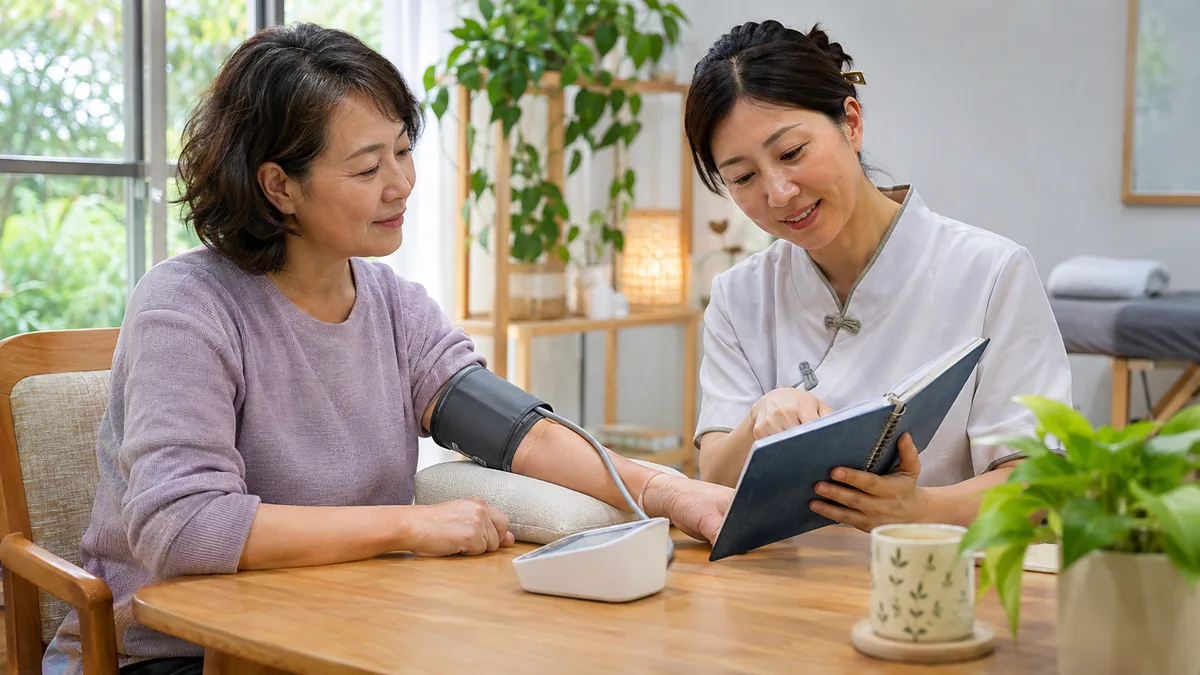
Yes. Acupuncture can be included in comprehensive primary-hypertension care to help lower blood pressure during treatment. It is coordinated with prescribed treatment, lifestyle management and blood-pressure monitoring.
How is blood pressure reviewed during care?
Blood-pressure care uses properly measured readings as an important guide. The upper, systolic value reflects pressure when the heart pumps; the lower, diastolic value reflects the interval between beats. The clinician sets targets from the readings and overall medical picture. NHLBI explains blood pressure and its measurement
This page concerns stable, diagnosed adult primary hypertension. The responsible clinician directs monitoring, targets and prescription changes, with acupuncture coordinated alongside existing treatment.
How does traditional assessment consider accompanying symptoms?
TCM considers dizziness and unsettled sleep together with dryness, heaviness, digestion and fatigue. The Traditional hospital framework (Chinese) describes five patterns, shown below. These distinguish excessive activity or disturbed movement from reduced support and nourishment. More than one pattern can be present.
Combinations such as dizziness, heaviness, fatigue or restless sleep guide the traditional emphasis, while the practitioner also reviews pressure records and medical findings.
How do the five traditional patterns differ?
The five patterns emphasize nourishing and settling, resolving phlegm and supporting digestion, nourishing Qi and Blood, combining support with movement, or supporting the traditional Kidney-Essence function. Associated dizziness, fatigue, dryness or heaviness guides the emphasis.
The hospital source uses the traditional category of dizziness.
| Traditional pattern | Features considered together | Traditional aim |
|---|---|---|
| Yin deficiency with rising Yang | Dizziness, irritability, dryness and restless sleep, with low-back or knee soreness. | Nourish Yin and settle relative excess activity. |
| Phlegm-turbidity disturbance | A heavy head, chest or abdominal fullness, nausea or drowsiness. | Support digestive transformation and address the traditional Phlegm-Dampness pattern. |
| Qi and Blood deficiency | Dizziness worsened by activity or fatigue, with weakness, palpitations or restless sleep. | Support Qi and Blood nourishment and the traditional Heart–Spleen functions. |
| Qi deficiency with stasis | Fatigue or shortness of breath with fixed or stabbing head pain. | Support reduced function while addressing constrained Qi/Blood movement. |
| Reduced Kidney-Essence support | Longstanding dizziness with low-back or knee weakness or tinnitus; cold and heat features are considered separately. | Choose a nourishing or warming direction according to the full presentation. |
Why are Taichong and Quchi considered?
Taichong is described through easing Liver constraint and settling excessive Liver activity in the traditional framework. Quchi has traditional heat-clearing and Qi/Blood-regulating uses. Taichong (Chinese) and Quchi (Chinese).
The practitioner selects local points, distant points or both according to the main symptoms, traditional findings, experience, preferences, comfort and response, explaining the aim.
How Effective Is Acupuncture for Hypertension?
Acupuncture can help lower blood pressure during treatment. A randomized trial of 160 people compared six weeks of acupuncture with sham treatment. Using 24-hour monitoring, the additional average reduction with acupuncture was:
- Systolic pressure: about 6.4 mmHg.
- Diastolic pressure: about 3.7 mmHg.
The medical team reviews these readings within your ongoing treatment plan.
Is Acupuncture Backed by Science?
Yes. The trial used 24-hour ambulatory blood-pressure monitoring in 160 adults with uncomplicated hypertension, most continuing stable antihypertensive medication. At the end of six weeks of treatment, average pressure reductions favored acupuncture over sham. Study or professional source
What You Should Know Before Booking an Acupuncture Treatment
Your first visit covers:
- Your symptoms, diagnosis, medicines and activity goals.
- How acupuncture fits the care you already receive.
- The treatment plan and a comfortable position.
Bring relevant reports and a medicine list.
Choosing a method you can comfortably receive
Our main approach is manual acupuncture. We also offer:
- Electroacupuncture: electrical stimulation through needles.
- Ear acupuncture (auricular acupuncture): needles placed in the ear.
The practitioner chooses the approach around your goals, health and comfort.
Ear seeds use adhesive patches to hold small seeds or beads over ear points. Pressing them provides stimulation without needles. Tell the practitioner if the patches or pressure irritate your skin so they can be adjusted.
During the appointment and afterward
The practitioner reviews symptoms, diagnoses, medicines and the activities you most want to improve, then explains point selection, positioning and treatment using sterile single-use needles. Mild aching or heaviness can occur. Report sharp pain, dizziness or significant discomfort immediately so the practitioner can adjust treatment. The UCLH patient guide
Before treatment, report pregnancy, medicines affecting clotting, implanted electronic devices and any previous fainting during procedures. Continue prescribed medicines according to the medical plan. Temporary soreness, small bruises or drowsiness can occur; arrange a ride if drowsy. Seek medical assessment for persistent or significant symptoms.
Very high readings and new symptoms take priority
Follow your medical team’s instructions for a very high reading. NHLBI blood-pressure guidance advises immediate contact with a clinician for a reading above 180 systolic or 120 diastolic.
Seek emergency assessment for chest pain, severe shortness of breath, new weakness, trouble speaking or a severe new neurological symptom.
Review considers readings taken under comparable conditions alongside the medical team’s plan. An initial acupuncture visit is about 75–90 minutes; retention, follow-up frequency and review timing are explained separately. acupuncture service information
Needle retention means the interval when the needles remain in position after placement; it is explained separately from the whole appointment.
How Do You Know If Acupuncture Is Working?
Readings moving toward the agreed target under comparable measurement conditions are an important indicator. Reviewing the record with medicines and symptoms helps coordinate continuing care.
Review readings and comfort as different outcomes
Use the monitoring method and conditions agreed with the clinician to review movement toward the pressure target. Also describe medicines and improvements in sleep or tension to help coordinate continuing care.
How to Get Acupuncture for Hypertension at Wongs Acupuncture
Wongs Acupuncture & Angel Alliance Physical Therapy offers acupuncture in Manhattan, Forest Hills, Great Neck. Contact the office that suits you, describe the main difficulty and any care already in place, and the team can confirm the appropriate service and appointment. If you plan to use insurance, the selected office can check benefits for the requested service.
Final Thoughts About Acupuncture & Hypertension
Acupuncture care for hypertension can be planned around specific symptoms and everyday goals. Contact the most convenient clinic with the diagnosis, current care and the main concern you want to improve so the team can arrange consultation and continuing treatment.
Sources
OUR LOCATIONS
Choose a clinic.
Choose a convenient location to discuss your needs or arrange a visit.