
HEALTH JOURNAL
Acupuncture for Tennis Elbow
Ben Wong · · Updated
Acupuncture can relieve tennis-elbow pain and improve arm function for gripping, lifting and work.
Tennis elbow is also called lateral epicondylitis or lateral elbow tendinopathy. Sport, gripping, lifting and work loads are relevant to assessment.
On this page
- Does Acupuncture Help with Tennis Elbow?
- How Effective Is Acupuncture for Tennis Elbow?
- Is Acupuncture Backed by Science?
- What You Should Know Before Booking an Acupuncture Treatment
- How Do You Know If Acupuncture Is Working?
- How to Get Acupuncture for Tennis Elbow at Wongs Acupuncture
- Final Thoughts About Acupuncture & Tennis Elbow
- Sources
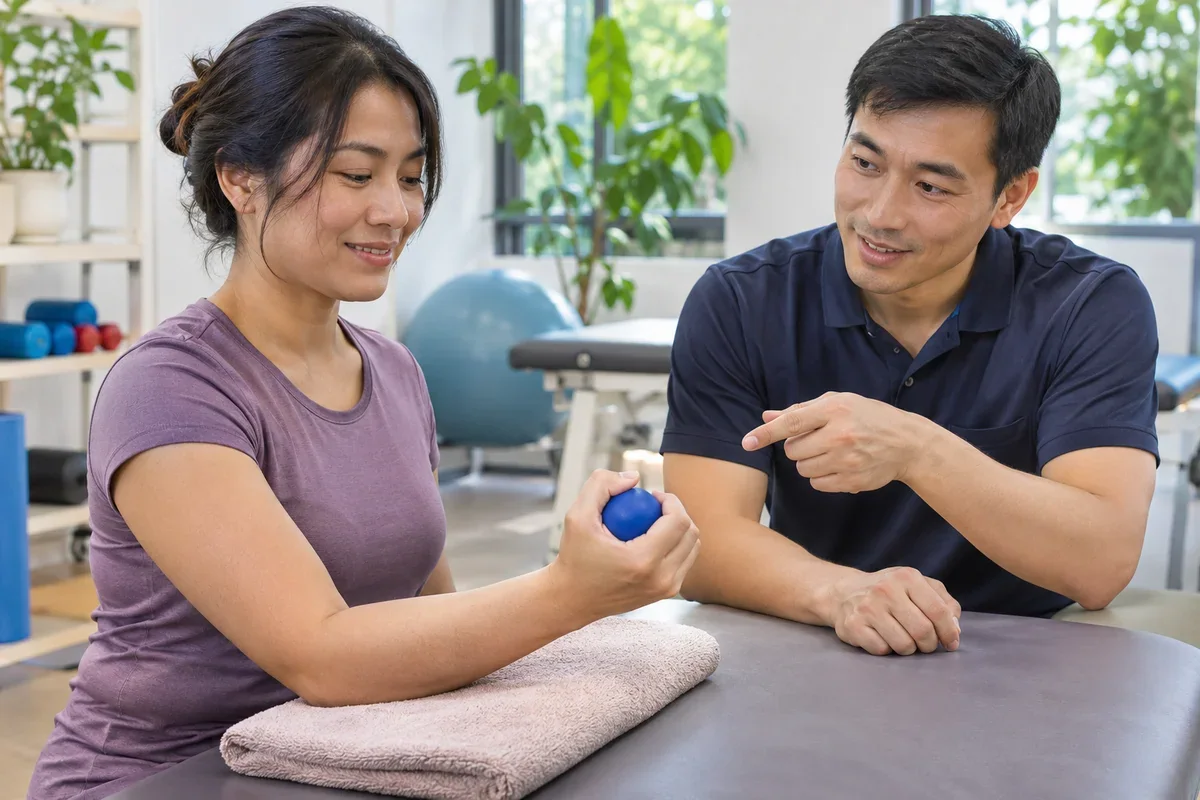
Does Acupuncture Help with Tennis Elbow?
Yes. Acupuncture can relieve tennis-elbow pain and improve arm function for gripping, lifting and work. Treatment considers the outer-elbow assessment, usual loading and traditional findings alongside a gradual return to activity.
The starting point is to confirm that the problem fits lateral elbow tendinopathy. Pain on the inner side of the elbow, a new injury, nerve symptoms or pain referred from the neck can require a different plan. Acupuncture should fit that assessment alongside changes to irritating activity and appropriate rehabilitation.
Why wrist and grip tasks can hurt at the elbow
The forearm muscles that help extend the wrist and fingers attach near the outer elbow. The American Academy of Orthopaedic Surgeons (AAOS) describes tendon degeneration or small tears associated with repeated use, often involving the tendon of the extensor carpi radialis brevis muscle, which helps extend and stabilize the wrist. This helps explain why the painful activity may involve the hand or wrist even though the soreness is felt near the elbow. Source
Assessment reviews the course, usual triggering tasks, grip and wrist function, and relevant neck or nerve findings. Follow-up uses a familiar daily task and a comfortable repeatable load.
Traditional point selection and biomedical explanations have different roles
Traditional explanations use channels, Qi, Blood and symptom patterns to describe points and treatment aims. Modern research examines sensory input, nervous-system responses and local tissue effects. Both help explain care focused on pain and activity.
In traditional Chinese medicine, channels are a framework connecting body regions and organizing point selection. Qi and blood describe aspects of function and nourishment within that framework.
The Guangzhou hospital source uses the hand Yangming relationship with the elbow to explain Quchi and Shousanli. The traditional aim of opening channels and relieving pain concerns regulated movement and reduced painful restriction. Traditional rationale (Chinese)
Biomedical research asks different questions, including how needle-related sensory input affects nervous-system pain processing, local tissues and the treatment context. The U.S. National Center for Complementary and Integrative Health (NCCIH) describes these as areas of investigation. Source
How do Quchi and Shousanli relate to pain and activity goals?
The Guangzhou hospital explanation links Quchi and Shousanli to the hand Yangming pathway through the elbow and describes relaxing the sinews and opening the channels as traditional aims. Quchi’s professional point reference also describes joint-opening and Qi/Blood-regulating uses. Traditional elbow reasoning (Chinese) and Quchi reference (Chinese).
The practitioner selects nearby points, distant points or both according to assessment, traditional findings, experience, preferences and response, using progress in grip and arm use to guide follow-up.
How Effective Is Acupuncture for Tennis Elbow?
A multicenter trial involving 96 people recorded better arm function and selected pain outcomes after acupuncture than sham laser. The practical benefit concerns more comfortable arm use, gripping and everyday tasks.
Relief and rebuilding workload need different parts of the plan
Compare a repeatable task such as lifting a mug, using a mouse or carrying an ordinary bag. Keep the weight and duration reasonably similar so the comparison is useful.
AAOS includes activity modification and physical therapy and occupational therapy addressing everyday activity in nonsurgical care. Our tennis and golfer's elbow physical therapy guide explains forearm exercise and graded task demands. Source
Is Acupuncture Backed by Science?
The multicenter study enrolled 96 people with unilateral tennis elbow lasting at least three months and compared manual acupuncture with sham laser. Three weeks after the course, arm function and selected pain outcomes favored acupuncture. Study or professional source
What You Should Know Before Booking an Acupuncture Treatment
The first visit reviews symptoms, diagnoses, medicines and activity goals before explaining the treatment and comfortable positioning. Bring relevant reports and a medicine list so acupuncture can be coordinated with existing care.
The treatment area and stimulation are selected for the person
The 2020 tennis-elbow trial used Shousanli, LI10, and Quchi, LI11, on the affected side. The practitioner selects treatment areas and stimulation around the elbow assessment, comfort and response. Source
The clinical plan adapts positioning, point selection and stimulation to the assessment, comfort and response. The practitioner explains the proposed procedure so the plan fits the elbow goal and can be received comfortably.
What a session can feel like
Treatment supports the arm and body comfortably while the practitioner uses fine sterile single-use needles. Mild aching, pressure or heaviness can occur, with stimulation adjusted to feedback. Procedure overview
Report significant pain, spreading unusual sensations, dizziness or other discomfort promptly so the practitioner can adjust treatment.
Appointment time, needle retention and follow-up are different
An initial acupuncture or physical therapy appointment is about 75–90 minutes, including assessment and preparation. Combining the services takes somewhat longer. acupuncture
Needle retention is the time needles remain in position after placement, explained according to the selected approach and comfort. General procedure example
The plan includes a review point for improvements in holding a mug, using a mouse or lifting, guiding follow-up and exercises.
Choosing a method you can comfortably receive
Our primary method is manual acupuncture, and we also offer electroacupuncture and auricular acupuncture. Electroacupuncture adds electrical stimulation through needles; auricular acupuncture uses needles in the ear. The practitioner selects the approach around treatment goals, health findings and comfort.
For patients who prefer a needle-free approach, ear seeds use adhesive patches to hold small seeds or beads over ear points for pressure stimulation. Auricular acupuncture uses needles, while ear seeds provide needle-free stimulation. Tell the practitioner about skin discomfort from the adhesive or pressure so it can be adjusted.
Temporary soreness, minor bleeding or bruising can occur. Pregnancy, bleeding disorders, blood-thinning medicines and implanted electrical devices can affect the treatment decision or choice of stimulation.
A new injury with deformity or marked swelling, increasing weakness or persistent numbness needs medical assessment.
How Do You Know If Acupuncture Is Working?
More comfortable holding, twisting or lifting the same object indicates improved pain and function. Reviewing these changes alongside load adjustment and exercises helps plan further care.
Reassess the response and relevant health changes
Follow-up reviews pain, grip and everyday hand use against the original task, then coordinates the next stage of treatment and loading.
How to Get Acupuncture for Tennis Elbow at Wongs Acupuncture
Wongs Acupuncture & Angel Alliance Physical Therapy offers acupuncture in Manhattan, Forest Hills, Great Neck. Contact the office that suits you, describe the main difficulty and any care already in place, and the team can confirm the appropriate service and appointment. If you plan to use insurance, the selected office can check benefits for the requested service.
Connect the assessed problem with the appropriate service
Wongs Acupuncture & Angel Alliance Physical Therapy offers acupuncture and physical therapy in Manhattan, Forest Hills and Great Neck. The starting plan connects the assessed elbow problem with the hand and arm tasks that matter to you, and gives each part of care a clear purpose and review point.
Final Thoughts About Acupuncture & Tennis Elbow
Acupuncture care for tennis elbow can be planned around specific symptoms and everyday goals. Contact the most convenient clinic with the diagnosis, current care and the main concern you want to improve so the team can arrange consultation and continuing treatment.
Sources
OUR LOCATIONS
Choose a clinic.
Choose a convenient location to discuss your needs or arrange a visit.