
HEALTH JOURNAL
Pain Below the Kneecap: Loading the Patellar Tendon Without Rushing
Dr. Wei (Sean) Li · · Updated
Physical therapy for patellar tendinopathy usually combines reducing aggravating activity with progressively rebuilding the tendon-and-thigh muscles' loading capacity. Pain below the kneecap during jumping or running can fit this problem, but location alone does not confirm it. Mayo Clinic describes this treatment approach.
A sudden injury with loss of the ability to straighten the knee needs prompt assessment for a different, potentially more serious injury. AAOS describes symptoms of a patellar tendon tear.
On this page
Tendon pain and kneecap-joint pain are different questions
The patellar tendon joins the bottom of the kneecap to the shinbone. It is part of the system that carries force from the front-thigh muscles to straighten the knee. Rising, stairs and jumping all use this system, but with different force and speed. Repeated loading can become painful when it exceeds current tolerance. The examination combines location, activity history, strength and movement. AAOS explains the knee-straightening mechanism.
Pain around or behind the kneecap may follow a different pattern, discussed in our patellofemoral pain article. Knee osteoarthritis is another distinct topic. These conditions can share difficult tasks such as stairs, but sharing a task does not mean they share the same diagnosis or exercise starting point.
Reduce the spike in demand
Review recent changes in jumping, running, sports sessions or total daily activity. Temporarily reducing the amount that provokes symptoms can make room for a more tolerable plan. Working through repeatedly worsening tendon pain is not the goal. Mayo Clinic describes activity adjustment as part of initial treatment.
The adjustment should be specific. Shortening one demanding session may be more useful than stopping every form of movement. A lower-demand alternative still needs to be comfortable and consistent with the examination. It should not simply reproduce the same pain under a different exercise name.
Build force before adding repeated fast loading
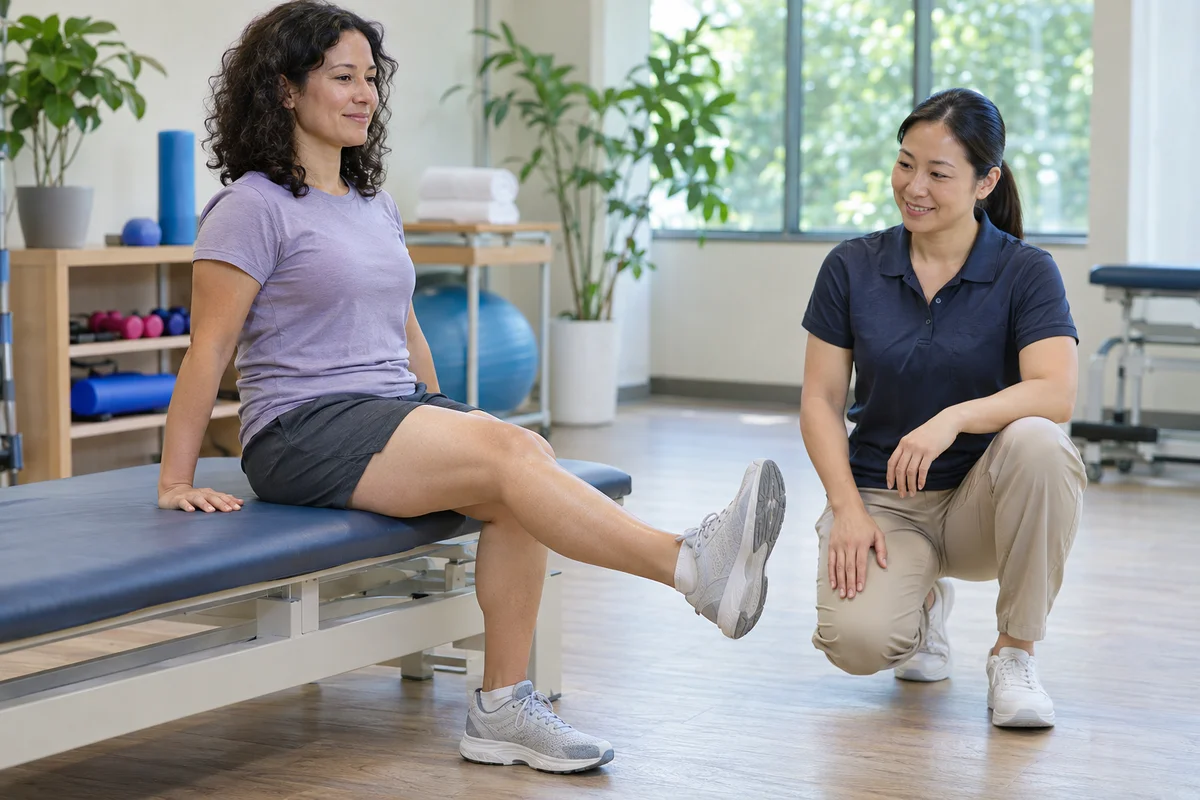
Strengthening gradually rebuilds the force that the muscle-tendon system can handle. A selected starting exercise may produce force while the knee stays fairly still; later exercises load it while bending and straightening. The therapist demonstrates the version, checks your reproduction, and sets range, resistance and repetitions. It need not begin with the deepest squat, heaviest weight or a fixed internet protocol. Mayo Clinic describes gradual tendon loading.
A controlled strength exercise and repeated jumping are different tasks. Later rehabilitation needs to bridge that difference when jumping is the goal. Increasing strength alone does not automatically show readiness for a full sports practice; the plan also needs to account for the speed and repetition of the intended activity.
In a trial published in 2021, 76 sport-active adults aged 18–35 with clinically and ultrasound-confirmed patellar tendinopathy received either a staged loading program or the study’s pain-provoking eccentric squat program, where the muscle works while lengthening. After 24 weeks, the staged program had a mean advantage of 9 points on a 100-point pain, function and sports questionnaire, with higher scores indicating better status.
This was a comparison of exercise programs for diagnosed, mostly longstanding tendinopathy. The proportion returning to sport did not differ statistically between groups. The findings concern pain and function under those programs, rather than showing that one session repairs the tendon or setting a personal sports-return date.
Review the next-day function, not only the workout
A useful review includes stairs, sit-to-stand, walking, and how the knee behaves after the session. If ordinary tasks become substantially harder after an increase, the program needs adjustment. Change one feature at a time when possible so the response remains understandable.
A strap or taping may help some people manage symptoms, but it does not replace rebuilding capacity. Persistent or severe symptoms may need a separate medical discussion about further options; these are different from the PT appointment offered here. A repaired tendon rupture follows its own protection and movement instructions. Mayo Clinic describes symptom measures and medical options.
How an acupuncture consultation fits tendon rehabilitation
An acupuncture consultation can address the pain concern alongside the existing tendon-loading plan. The consultation starts with the diagnosis, the activity that brings on symptoms, the recent training load and the rehabilitation instructions. Patellar tendinopathy, pain around the kneecap joint and a repaired tendon rupture remain different care paths.
The practitioner reviews a comfortable supported position, sensitive areas and the proposed stimulation. Acupuncture uses sensory stimulation at selected points; general pain-processing explanations describe that approach. The loading plan still needs to rebuild the ability to handle strength work and, when relevant, repeated jumping. A more comfortable session and readiness for a harder jumping task are separate observations.
At review, compare pain during the same permitted activity, the response later that day or the next day, and the amount of activity the tendon can manage. The acupuncture and rehabilitation teams can use those observations to coordinate care. After a tendon repair, the surgical protection and movement instructions continue to lead the plan.
The point plan can combine sites near the knee with sites farther away, depending on the examination and comfort. Yanglingquan near the outer knee is one traditional example associated with the sinews and joints; it illustrates the reasoning behind point selection, rather than a fixed patellar-tendon prescription. The practitioner also considers sensitive skin and comfortable knee support before choosing the actual sites.
NCCIH: Acupuncture—Effectiveness and Safety · 中国医药信息查询平台:阳陵泉
Know when the plan should pause
A knee that cannot be moved or loaded, is badly swollen or deformed, or is hot and red with fever needs prompt medical assessment. A new locking episode or sudden loss of knee function also deserves review rather than more repetitions. NHS knee-pain guidance
At Wongs Acupuncture & Angel Alliance Physical Therapy, physical therapy connects the examination to a practical loading progression. A separate acupuncture consultation can review symptom-care options alongside rehabilitation. The goal is a knee that handles your actual activities more comfortably, while a possible tendon rupture or another diagnosis receives appropriate medical care.
OUR LOCATIONS
Choose a clinic.
Choose a convenient location to discuss your needs or arrange a visit.