
HEALTH JOURNAL
Can Pilates Fit a Low Back Pain Recovery Plan?
Dr. Wei (Sean) Li · · Updated
Pilates can be one exercise option for some people with persistent nonspecific low back pain. The important choice is a tolerable movement plan that fits the current symptoms, rather than a promise that every Pilates class will treat every cause of back pain. New, severe, or changing symptoms need assessment before demanding exercise.
“Nonspecific” means that a particular disease or structural cause has not been identified to explain the pain; it does not mean that the pain is unreal. WHO explains this distinction. “Chronic” generally means symptoms lasting more than 12 weeks. A fracture, a recent operation or a specific nerve problem follows a different assessment and care pathway.
On this page
What improvements have been studied?
A Cochrane review published in 2015 included ten trials with 510 participants with chronic nonspecific low back pain. Compared with minimal intervention—little additional treatment—Pilates improved pain and disability at some short- and intermediate-term follow-ups. It did not establish overall superiority over other exercise; one trial favored other exercise for function at intermediate follow-up. The review’s follow-up periods extended up to six months.
A 2025 randomized trial of 168 people aged 18–60 compared higher- and lower-intensity clinical Pilates twice weekly for six weeks. Pain and disability outcomes were very similar at the end of those six weeks, while adverse effects were less common with lower intensity. This supports choosing a manageable challenge rather than assuming that harder exercise will relieve more pain; the study schedule is not a required local course.
For an individual, preference and the ability to participate consistently matter. A workable exercise that can be learned and adjusted is more useful than choosing a class solely because its name sounds therapeutic.
Choose a starting position the back can tolerate
The first modification may be small: a shorter movement range, more support, fewer repeated movements, or a different position. Someone who dislikes repeated forward curling does not have to begin with a full roll-up. Someone uncomfortable lying flat may need another setup. These choices should follow the assessment rather than a universal list of banned movements.
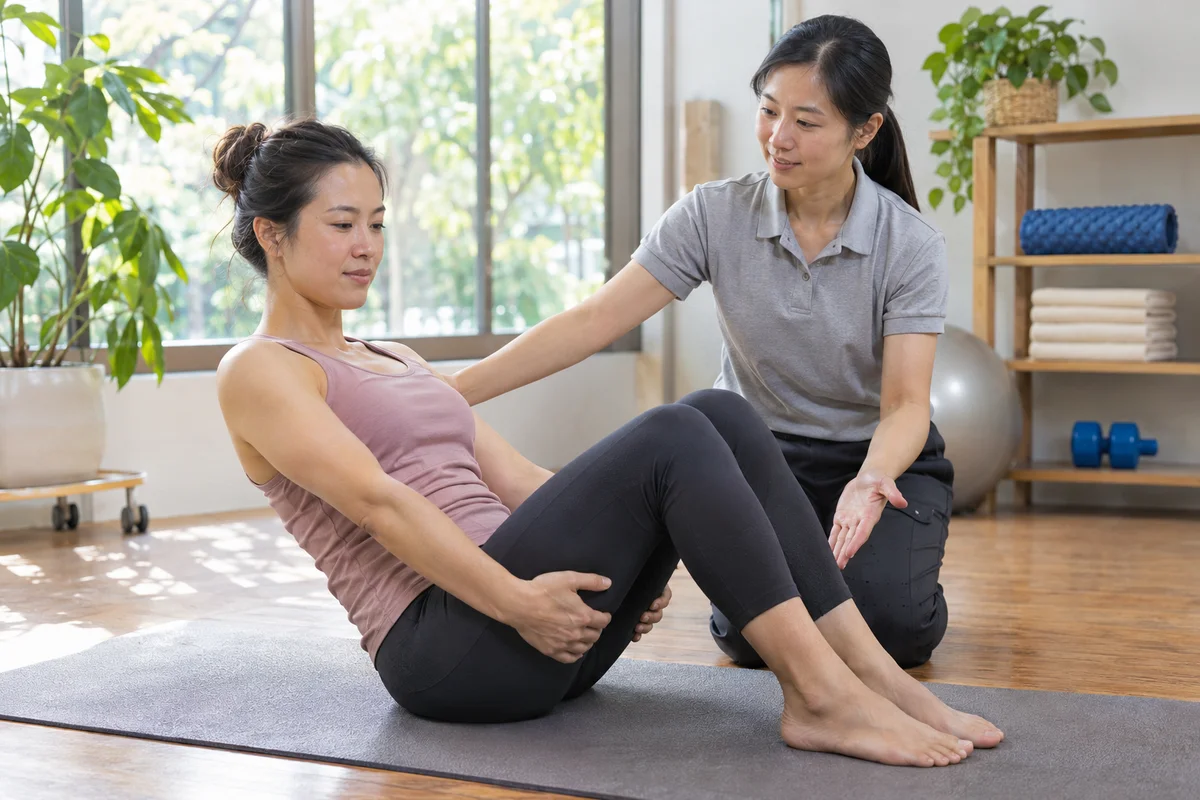
The aim is to coordinate breathing and movement without forcing a painful endpoint. A therapist or instructor can observe whether the task stays controlled as the arms or legs move. Constantly tightening the abdomen as hard as possible is not the same as learning that control.
Use the response to adjust the activity
A session should be judged by more than how it feels while concentrating on the exercise. Consider whether walking, sitting transitions, and the rest of the day remain manageable. If a change leaves symptoms substantially worse or ordinary tasks harder, the range, resistance, repetitions, or total activity needs review.
For example, adding a long class, a new home routine, and extra walking on the same day makes the response harder to interpret. Change one demand at a time when possible. This helps the plan develop from actual tolerance instead of a fixed challenge calendar.
When an exercise class is not the next step
Seek emergency care now for back pain with new difficulty urinating or loss of bladder or bowel control, loss of feeling around the genitals or anus, significant new leg weakness, chest pain, or pain after a serious accident. Go to an emergency department; call 911 if you cannot travel safely. Do not wait for a routine appointment or try a gentler Pilates video.
Severe pain that starts suddenly or gets worse quickly needs prompt medical assessment, even without those emergency signs. The NHS back-pain guidance separates these levels of urgency. The AAOS cauda equina guidance explains why new bladder or bowel dysfunction and loss of feeling between the legs or around the genitals and anus can signal a surgical emergency.
For stable back pain, a movement plan can connect exercise with useful daily activity. General back-pain management, as described in NIAMS back-pain guidance, often includes staying active with suitable adjustments rather than prolonged bed rest.
Connect Pilates with the purpose of care
At Wongs Acupuncture & Angel Alliance Physical Therapy, physical therapy can help distinguish the clinical problem from the fitness goal. The private Pilates format allows individual movement instruction, while an acupuncture consultation can review pain-care options within the wider plan. The Pilates at home for beginners guide serves readers who already have an appropriate starting point for home practice; it is not a substitute for assessing new back symptoms.
OUR LOCATIONS
Choose a clinic.
Choose a convenient location to discuss your needs or arrange a visit.